Showing posts with label period movie. Show all posts

We'll Meet Again Review

We'll Meet Again
Average Reviews:

(More customer reviews)
Compelling war drama about a USA Air Base in England. Struggling B-17 crews find solace among British ladies. The Yank's money is appreciated but not always their ways with alcohol and women. This is a story of the small village of Market Wetherby and it's war-weary locals, and how they cope with the new arrivals, American bomber soldiers who freshly join the war, and expect to win overnight.
The British TV has always been excellent in period television series, war dramatizations, and this is no exception. War nostalgia. It is surpurb, with added interest of half a cast of Americans joining British actors. Brits have the preserved buildings to pull off a period series. They use that to advantage. Beautiful 1943 scenery, costumes, props. This show was actually filmed in the 80s but because of the historical setting, it is a timeless DVD set; classic. Perfect for those with war interest, awesome for those interested in what it was like living in a country waiting to be invaded by Hitler's army. It is something of a cousin series to the more recent homeland war drama of "Foyles War" (a must for all British Drama fans) and "Enemy at the Door" (also good).
WE'LL MEET AGAIN cleverly mixes in actual bomber air strip and bombing raid footage. But much of the action takes place in the village homes and the local pub. Dr. Helen Dereham (by Susannah York) and Maj. Jim Kiley (Michael Shannon) are only two that show the extraordinary work that war leaders had to complete, as well as the struggles romantically of working so closely in life/death living. There's is not the only romance. Plenty of hardship and lives lost. Very believable, although I'm too young to know first-hand, being a Baby Boomer.
The series ends well; but with a potential for another season, which, alas, never came. This set has no subtitles or CC. It's box warning of partial nudity refers to one breast exposed for 3 seconds.
My wife and I both enjoyed this, both sorry there were no additional episodes after the 13 provided in this set.
Episode details (each about 53 min.):
1 ALL DAY AND EVERY DAY-Market Wetherby, Suffolk, April 1943. American Air Force arrives in England ungraciously.
2 HANDS ACROSS THE SEA-Cocky American crews fail to perform well in the air & on the local ground.
3 THE MILK RUN-Letty's Uncle Sid arrives with contraband booze while she falls for a Yank on a 'milk run'-safe mission.
4 ONE STEP FORWARD,TWO STEPS BACK-Some romance buds but overall relations remain tense.
5 THE BIG ONE-Market Wetherby & the American Base find some agreeable relationships. 'The Big One' mission heads over Germany.
6 UP THE SMOKE-Some Yanks get London R&R while Dr. Dereham ponders her feelings between her injured husband & US Maj Kylie.
7 FIGHTING MEN-2 men in English woman's lives seems to become a minor epidemic, plus secrets are found out.
8 A WING AND A PRAYER-Yank marries a local just prior to a dangerous raid.
9 YOU'LL NEVER KNOW-2 Brit wives contemplate continued relations with Yanks. 3 sec. of female nudity.
10 OLD ENOUGH TO FIGHT-Maj Kiley halts his romantic relationship causing poor results at work.
11 ONE DAY AT A TIME-Maj Kiley gets more active in the air & personally as death touches others lives.
12 EXCEPTIONAL CIRCUMSTANCES-Dr. Dereham adds more bedside time to her manner dealing with Maj Kiley's injuries.
13 THE END OF THE BEGINNING-It's love & war and time to choose permanent sides on romance issues.

Click Here to see more reviews about: We'll Meet Again


Buy Now

Click here for more information about We'll Meet Again

Read More...

Little Women (1933) (1933) Review

Little Women (1933) (1933)
Average Reviews:

(More customer reviews)
Based upon Louisa May Alcott's beloved book of the same name, this black and white film lovingly captures its charm. It is also a pretty faithful adaptation of Ms. Alcott's classic. Though there may be a half dozen adaptations, of the three that I have seen this one is, undoubtedly, the best. Its writing deservedly won the Academy Award in 1933 for Best Screenplay Adaptation. It is unfortunate, however, that although the film was also nominated for the Best Picture Award, it lost to "Cavalcade", a largely forgotten, lesser film.
Deftly directed by George Cukor, the film tells the story of the March family, whose patriarch has gone off to fight in the Union Army during the Civil War. Mrs. March is left to raise her four daughters, Meg, Jo, Beth, and Amy, in nineteenth century New England. The film focuses on the personal interactions family members have with each other, as well as with their friends and neighbors, in order to create a portrait of an idealized, loving family held together during trying times. It is also a very poignant coming of age film.
The film primarily revolves around the March sisters, with the focus on independent and headstrong Jo, an aspiring writer, as well as a tomboy and second oldest of the four sisters. In addition to the March family, a wealthy neighbor's nephew, Laurie, plays a prominent role in the life of the March family, with a lesser one played by the family's wealthy Aunt March.
This film is beautifully cast, with a luminous Katherine Hepburn perfect in the lead role. As Jo March, Ms. Hepburn captures the essence of this beloved character. Feisty, independent, loving, and intelligent, her characterization of Jo is inspired, though Ms. Hepburn may not have strayed too far from her own persona.
Spring Byington is wonderful as mother to the March daughters, while Frances Dee, Jean Parker, and Joan Bennett are uniformly excellent in the respective roles of Meg, Beth, and Amy, the sisters whom Jo so dearly loves. Douglass Montgomery is superb as Laurie, Jo's best friend, though his painted lips and shadowed eyelids are a bit anachronistic and a style holdover from the silent screen era.
Paul Lukas is endearing as the Professor, Jo's mature love interest. Henry Stephensen is effective as the generous, elderly neighbor, Mr. James Lawrence, uncle to Laurie. Veteran character actress, Edna Mae Oliver, rounds out this superlative cast as cantankerous Aunt March and shamelessly steals every scene in which she appears.
This is a wonderful vintage film that would be a welcome addition to the personal collection of those who love beautifully made, classic films. Bravo!

Click Here to see more reviews about: Little Women (1933) (1933)

LITTLE WOMEN IS A COMING OF AGE DRAMA TRACING THE LIVES OFFOUR SISTERS: MEG, JO, BETH AND AMY.

Buy Now

Click here for more information about Little Women (1933) (1933)

Read More...

The American Girl Movie Collection (Samantha - An American Girl Holiday / Felicity - An American Girl Adventure / Molly - An American Girl on the Home Front) (2006) Review

The American Girl Movie Collection (Samantha - An American Girl Holiday / Felicity - An American Girl Adventure / Molly - An American Girl on the Home Front) (2006)
Average Reviews:

(More customer reviews)
All three of these movies are fantastic, and far exceeded my expectations. I love them as much as the kids, as they are not dumbed down or silly. The cinematography is excellent, production values are high, acting is solid. The period sets and costumes are well done. And the stories are great - realistic plots and drama. In short, these films represent what is possible in family / kids movies, and what I would like to see more of as an alternative and antidote to the usual Hollywood blockbuster spectacles. Highly recommended, especially to independent and active girls who need strong role models, but also to intelligent boys and adults who like good stories. Great value for three discs.

Click Here to see more reviews about: The American Girl Movie Collection (Samantha - An American Girl Holiday / Felicity - An American Girl Adventure / Molly - An American Girl on the Home Front) (2006)


Buy Now

Click here for more information about The American Girl Movie Collection (Samantha - An American Girl Holiday / Felicity - An American Girl Adventure / Molly - An American Girl on the Home Front) (2006)

Read More...

Sommersby (1993) Review

Sommersby (1993)
Average Reviews:

(More customer reviews)
This review refers to the DVD edition (Warner Bros) of "Sommersby".....
No matter how often I watch this wonderful story, I am always left sighing at the end. Lucky for me DVDs have been invented, or for sure I would have worn out several tapes by now. "Sommersby" has got something for everyone. The romantic in you will love the deep and passionate love story. For those that love to try to solve a mystery,this is a good one. It's a period piece set post civil war, and has some excellent court-room drama as well.
Jack Sommersby has left his small southern town of Vine Hill to fight in the Civil War. He hasn't been seen or heard from in over six years and is presumed dead. Then all of a sudden, one day he turns up to find his town ravaged by the effects of the war, and his lovely wife Laurel, now promised to another. He seems to pick up right where he left off though,renewing friendships,becoming very much a part of the everyday life in the town, and having his wife back where she belongs... in his bed.Up to now, we only get a little hint that someting is amiss..."Jethro", his faithful dog, doesnt seem to recognize him.
As the story progresses,and Jack and Laurel fall more deeply in love then ever, we have more and more reason to believe that Jack is not who he says he is. Could he possibly be an imposter with an uncanny resemblence to Sommersby? Do the townfolk realize this and accept him at his word because he has brought a new hope and a new vitality to Vine Hill? And what about Laurel, did she know all along? When Jack Sommersby must stand trial for his life will the truth finally come out? Who is Jack Sommersby???
Richard Gere and Jodie Foster have an incredible chemistry and you will feel the intense love they share on screen. The supporting cast turn in outstanding performances as well. James Earl Jones as a black judge who must put up with the extreme prejudices of the witnesses,Bill Pullman as the jilted and vengeful fiancee,Frankie Faison the ex-slave now becoming a property owner, and young Brett Kelly who's love grows for his new found father all add greatly to the film. And of course,it is always a treat to see Wiiliam Windom make an appearance.The story based on the beautiful French film "The Return of Martin Guerre",is a fabulous remake. The musical score by Danny Elfman is one that will stay with you long after the view,and the photography of Philippe Rosselot is gorgeous.All under the expert direction of Jon Amiel make this one beautiful film.
The DVD presents a beautiful picture in widescreen or a standard version.The color does justice to the lush farmlands. The sound in Dolby Surround(Stereo) is excellent. No special features other than a theatrical trailer. Languages and subtitles are English and French.
"Sommersby" is a film that will leave you thinking about it and maybe sighing a little too.....enjoy...Laurie

Click Here to see more reviews about: Sommersby (1993)

When Jack Sommersby returns home to the South after the Civil War, he is not the man anyone remembers, including his wife. The real test of their newfound love and his identity comes when he stands trial for his life.Item Type: DVD MovieItem Rating: PG13Street Date: 09/21/99Wide Screen: yesDirector Cut: noSpecial Edition: noLanguage: ENGLISHForeign Film: noSubtitles: noDubbed: noFull Frame: yesRe-Release: noPackaging: Sleeve

Buy Now

Click here for more information about Sommersby (1993)

Read More...

Masterpiece Theatre: All the King's Men (2000) Review

Masterpiece Theatre: All the King's Men (2000)
Average Reviews:

(More customer reviews)
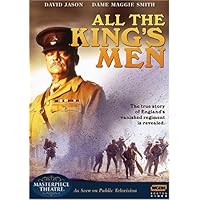
It is unusual in the history of warfare for entire units to disappear without a trace and when it does occur, such occurrences are usually the result of serious mistakes that lead to the annihilation of one's command. In American history, Custer and the 7th Cavalry come to mind. Further back, the disappearance of the entire Roman 9th Hispana Legion in Scotland is another example. In the British-made movie entitled "All the King's Men," a more recent occurrence of such an incident is portrayed. On August 12, 1915 at Gallipoli, over 300 British soldiers of the 1/5th Norfolk Battalion attacked into a morning mist and where never seen again. Few of the bodies were ever found and none returned from Turkish prisons after the war. Winston Churchill no less, called it one of the great-unsolved mysteries of the 20th Century.
This film focuses on the "Sandringham Company," formed mostly from servants, gardeners and other workers on King George V's estate of that name, which were part of the 1/5th Norfolk Battalion. Virtually none of these men were ever seen again and the Royal family made great efforts during and after the war to ascertain their fate. The main characters in this film are Captain Frank Beck (David Jason), his two nephews who are lieutenants in the company, a Sergeant Grimes, King George V and Queen Alexandra. Beck is the main focus, as the fifty-plus estate manager who organizes and prepares the unit for war; rather than appearing as an odious "Colonel Blimp" type character, Jason wonderfully portrays Beck as a trusted father figure in the unit, respected by both the King and the troops. Much of the early part of the film focuses on the lives of the men while on the estate, and Beck's efforts to go to war with them despite his age. Eventually, Queen Alexandra lends her support to his martial ambitions and Beck is allowed to lead his men off to Gallipoli.
Unfortunately, the film bogs down a bit once the unit gets to Gallipoli. In reality, the 1/5th Norfolk landed at Suvla Bay on 10 August and was lost two days later, but in the film these two days seem to drag. The fact that the British were making a major effort to break out of the Suvla Bay enclave is missed here, because the film shows the men of the company lounging about and engaging in mundane camp activities. Some patrol activity against Turkish snipers is shown, but this has little relevance. On 12 August, as part of a minor preliminary operation to clear the way for a larger attack on the next day, the 1/5th Norfolks and several other units are sent forward to clear out Turkish outposts. At this point in the film, when the unit disappears in the mists, the director begins to switch back and forth between post-war investigations into the disappearance and a hypothetical depiction of what actually occurred on that day.
Historically, the film is a bit disappointing in recounting the fate of the "Sandringham Company" because it fails to put the day in perspective. The Sandringham company is shown in total isolation from the rest of the British army. The participation of other units or even the rest of the battalion is not depicted in this film, nor is even the audience told what their mission was. In fact, Captain Frank Beck did not lead the attack; it was his superior Colonel Beauchamp (Beck is never shown interacting with his superiors), who also died. The 1/5th Norfolk lost 372 men that day, of which the Sandringham men were only 2/3rds of the casualties. Even more glaring is that the British suffered about 18,000 casualties in less than a week at Suvla Bay during the period of the Sandringham company's brief involvement in the campaign; the disappearance of a few hundred troops in the midst of such slaughter and confusion might have made more sense given these facts.
Obviously the men were all killed, since none ever returned, but the exact nature of their fate remained a mystery. This film depicts the Sandringham's as punching through the thin Turkish line in a glorious charge, but are then overwhelmed once they become surrounded behind enemy lines. The Turks execute all the captured survivors, including Beck. While this theory has merit, it is not the only possibility. The film depicts the mist as obscuring the battlefield, but fails to show the heavy scrub brush and small trees that hindered the British advance and made it difficult for the officers to maintain control. Another plausible theory, not suggested by the film, is that the 1/5th Norfolk lost cohesion in the rough terrain and the battle-hardened Turks destroyed the untried unit piece-meal. While there is little doubt that the Turks were not taking prisoners that day, there is no evidence to suggest that the "Sandringham's" went down in a blaze of glory as depicted in this film (although certainly such a depiction is preferred to anything that suggests an ignominious end). Perhaps they did, but the loss of the entire unit is more indicative of incompetence than competence.
Despite these historical reservations, the film is very well done and provides a poignant example of the enthusiasm of men to go off to war in the early days of the First World War. Although some minor characters, including a conscientious objector and a shell-shock casualty, temper the glorious view of war to some extent, the film remains committed to a patriotic depiction of martial duty. The cost of such devotion is apparent by the end of the film, but the meaning of such sacrifice is left ambiguous. Contrast this British-made ambivalence about the sacrifices of the First World War with the current American films that glorify the sacrifices of the Second World War.

Click Here to see more reviews about: Masterpiece Theatre: All the King's Men (2000)

The true story of England's vanished regiment is revealed. It is one of the most compelling and curious legends of the First World War. Led by Captain Frank Beck (David Jason), a favorite agent of King George V (David Troughton, Madame Bovary), Sandringham Company was comprised entirely of servants, grooms and gardeners from the King's Norfolk Estate. On August 12, 1915 the unit marched into battle against the Turks in Gallipoli and simply vanished, never to be heard from again. Queen Alexandra, played by Dame Maggie Smith (Harry Potter and the Sorcerer's Stone, A Room with a View), was the driving force behind the investigation into the real fate of the battalion. But despite her extensive inquires, no trace of the men was ever discovered. Now, All the King's Men brings the details of what really happened in 1915 to the screen for the first time. It tells the story of these amateur soldiers, the idyllic life and loves they left behind in the quintessential English country estate and the horrors of an ill-prepared campaign to which they were subjected.

Buy Now

Click here for more information about Masterpiece Theatre: All the King's Men (2000)

Read More...

Dangerous Liaisons (1988) Review

Dangerous Liaisons (1988)
Average Reviews:

(More customer reviews)
At first glance, DANGEROUS LIAISONS appears to be an extravagant eighteenth-century period-piece, which it is; the powdered wigs and overflowing corsets typical of the genre are all here, and the cinematography is appropriately glossy. But boiling beneath the elegant surface are the deviously twisted sensibilities of two monstrous characters--the Marquise de Merteuil (Glenn Close) and the Vicomte de Valmont (John Malkovich), a pair of schemers (and former lovers) who take pleasure in coolly manipulating and seducing those around them. The Marquise challenges the Vicomte to seduce the virtuous Madame de Tourvel (Michelle Pfeiffer), but when the latter finds himself genuinely falling in love with his intended prey, the game quickly turns fatal--with devastating consequences for everyone involved.
A period-piece? Yes, but one honed with a distinctly contemporary menace. It's rare, for example, to find a period-piece with such delicious, razor-sharp dialogue (which garnered the film an Academy Award for Best Screenplay Adaptation). It's also rare to find a period-piece that focuses primarily on sex, but treats its subject matter with so little eroticism. DANGEROUS LIAISONS is more about power and one-upmanship; sex merely serves as the weapon of choice. It's a diabolically entertaining film, a decadent one even; there's something both disturbing and enjoyable about watching the two central characters indulging in their elaborate power plays.
The performances are strong for the most part (Close, Malkovich, and Pfeiffer all received Oscar nominations), although the women fare much better than the men. Glenn Close does a magnificent job as the evil Marquise, and supplies the film with some of its most explosive moments--the scene in which she quietly utters the word "War" without batting an eyelash is chilling beyond words. I didn't completely buy Malkovich as the charming lady-killer (a small but serious flaw that undermines the whole film), but he does a fine job with what he's given. Keanu Reeves, as usual, is utterly unfathomable, even in a relatively minor part. The best performance of all is delivered by Michelle Pfeiffer; as the tormented wife, she bares every inch of her moral anguish, and the results are heartbreaking to behold. Behind the cold-blooded duo of Close and Malkovich, it's Pfeiffer who provides the emotional heart of the film, and in every one of her pained expressions lies the evidence of the very human consequences at stake.

Click Here to see more reviews about: Dangerous Liaisons (1988)

THE BITING SATIRE ABOUT LOVE AND LUST, PASSION AND DECEPTIONINCLUDES DIRECTOR'S COMMENTARY.

Buy NowGet 22% OFF

Click here for more information about Dangerous Liaisons (1988)

Read More...

Sunshine (2000) Review

Sunshine (2000)
Average Reviews:

(More customer reviews)
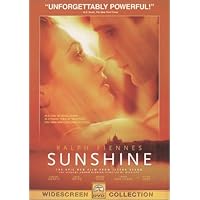
It is too bad that so few people saw this film -- one of the best films of 2000. It focuses upon several generations of an ambitious Jewish family in Austria-Hungary. Its message is sad: in 20th century Eastern Europe, the Jews had no hope integrating -- not with the Emperor, not with the Nazis, and not with the Communists. This Jewish family certainly tried. They fought in World War I, the family gave up its Jewish name, one of them married a Catholic and converted to Catholicism, etc. But nothing was ever enough, and anti-Semitism led to tragedy after tragedy. The film ends while the Communists control Hungary. The youngest member of the family naively had worked for the Communists but became disillusioned. He reclaims the family's Jewish name and walks away from politics and the public realm altogether. We know that he sees the socio-political situation much more clearly than did his father, grandfather, and great-grandfather. He knows that he has a choice: endorse official anti-Semitism (and even then risk being accused of conspiring with Zionists) or be a Jew and take the diminished stature in Hungarian society that comes with it. There is no middle way -- the family's multigenerational drive to accomodate Judaism with financial and political success has failed.
This film has a sweep like few others today. It spans generations, tackles big historical events, and wrestles with serious themes. It is well worth seeing if you like serious cinema. Highly recommended.

Click Here to see more reviews about: Sunshine (2000)


Buy Now

Click here for more information about Sunshine (2000)

Read More...

The Pianist Review

The Pianist
Average Reviews:

(More customer reviews)
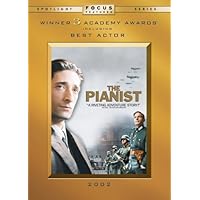
"The Pianist" is the true story of Wladyslaw Szpilman, a Polish Jew and a brilliant pianist who lived in Warsaw during World War II. Beginning soon after the Blitzkrieg, the film follows Szpilman's experience as he witnesses all the oppression from the Germans, from restricting Jewish access to executing Jews in rows. Before long, Szpilman's family is brought together to be shipped off to Nazi labor camps, but he manages to elude deportation. From then on, Szpilman tries to survive among the devastated Warsaw ghetto.
It is difficult to decide where to begin praising a film as good as this. Having also lived in the Warsaw ghetto during World War II, director Roman Polanski has now created a marvelous film that unflinchingly shows the horrors of the Holocaust, yet has great moments of kindness and triumph as well. The film presents many disturbing images, and it is not for the faint of heart. However, Polanski always keeps Szpilman's survival to be the main focus throughout the film, with the cruelty of the Nazis as a secondary theme. Thus, "The Pianist" never shoves brutality in your face just for shock value. Instead, it comes off as both a thrilling tale of survival and a genuinely moving tribute to the human spirit.
The meticulous direction leaves even the shortest of individual scenes lingering in the viewer's mind. For example, one scene shows a woman being shot in the back while running down the street, and Polanski had told the actress EXACTLY how to slump down and keel into a lifeless position; he said this was the way he had once seen a woman die while he was a child in Warsaw. Other equally memorable moments include images of Szpilman drinking whatever water he can find, and one of the most harrowing scenes involves a man in a wheelchair being thrown from his apartment into the street.
The technical elements are superb as well; everything is done in such an incredibly realistic way that the audience virtually becomes a first-hand witness of everything Szpilman goes through. The cinematography, costume design, and sound effects editing make Warsaw come to life with all its sounds and sights. Particularly noteworthy: the desolate snow-covered buildings, the smoke rising into the clouds from burning corpses, and the momentary loss of sound as Szpilman is temporarily deafened by a tank blast.
But the performance by lead actor Adrien Brody is what really makes the entire film so thoroughly memorable and engrossing. Brody is rarely seen off-camera, so a lot depends on him being able to tell much of the story himself. His actions and eyes speak so much without him having to say anything; I will never forget the look on his face after he accidentally broke a set of dishes. The other actors (such as Ed Stoppard, Thomas Kretschmann, and Emilia Fox) don't get nearly as much screen time, but they too do well with what they've been given.
Finally, the denouement is unforgettable. No one will be breathing during the last half-hour of this film. It starts off remarkably tense, but the last 15 minutes progress with increasing poignancy. When the film came to its finish and the credits began to appear, no one in my local movie theater dared to move a muscle; everyone sat through all the credits and watched the film to its very end.
Recommendations don't get much higher than that.
Not easy to watch, but certainly rewarding, this independent film will leave its haunting spell in your mind for years to come. Truly amazing on all counts, "The Pianist" is one of the best films of 2002, and it will be a crying shame if it doesn't get at least a few Oscar nominations. See it now.

Click Here to see more reviews about: The Pianist

Nominated for 7 Academy Awards, including Best Picture, and winner of 3, The Pianist stars Oscar winner Adrien Brody in the true-life story of brilliant pianist and composer Wladyslaw Szpilman, the most acclaimed young musician of his time until his promising career was interrupted by the onset of World War II. This powerful, ultimately triumphant film follows Szpilman’s heroic and inspirational journey of survival with the unlikely help from a sympathetic German officer (Thomas Kretschmann). A truly unforgettable epic, testifying to both the power of hope and the resiliency of the human spirit, The Pianist is a miraculous tale of survival masterfully brought to life by visionary filmmaker Roman Polanski in his most personal movie ever.

Buy NowGet 30% OFF

Click here for more information about The Pianist

Read More...

Major Dundee (1965) Review

Major Dundee  (1965)
Average Reviews:

(More customer reviews)
Well, I've seen the extended version, and even if they added only 12 minutes, out of a possible forty I guess, it still makes so much more sense now it is totally worth it. Kudos to the editors behind this reconstruction. I didn't have any problem following any of it, and I'm not really bright at complicated plots. All the main outlines of the drama became extremely vivid and clear; the tension between the Confederates and the Union soldiers; the dilemma about the French army; the massacre of the family at the beginning that causes Major Dundee to go all medieval and turn over command at the prison to his skeptical sub-lieutenant. "Maybe there's a reason why you're a jailer, not a soldier, Amos." They keep saying this as though being a jailer were something terrible.
Charlton Heston's descent into a delirium of infection is painful to deal with, very real. Now we see him drawn to the Mexican woman who brings him food; he's so out of it he finds himself having sex with her for the comfort it brings, and then of all times that's when Senta Berger shows up at his door on her own mission of mercy. She sees the naked back of the Mexican woman and you can see the pain in her eyes. Heston's pretty covered up but you get the picture, and he's man enough not to lie about what happened.
Richard Harris looks great and brings a rebel energy to the movie. Warren Oates' death scene is pure poetry, shot through with genius. What a ham he is! And oh, that is ham deluxe, 100 percent pure gold!
Michael Anderson, Jr. is excellent in his role as the young bugler, so much better here than in his other parts. He's sort of playing the Claude Jarman role, or maybe the part Brandon De Wilde played in IN HARMS WAY. The scenes where he meets Begonia Palacios in the ruined town where Senta Berger works as a doctor are credible and hilarious because he's so much in lust he can't see anything else but "Linda." Equally funny is the aftermath of the skirmish in which he's been shot in the butt and then they try to fix him up by tearing out the seat of his pants and stitching up what looks like his bare ass (kind of daring nudity for 1965). Anderson's got game and you can see why Peckinpah made him so prominent in this movie.
[SPOILER]
The chronology straightens itself out and before long we come to the scene where the troops find the crucified corpse of their Indian scout, whose trustworthiness the previous version had left in doubt. Somehow it is nice, after all these forty years, to have at least one MAJOR DUNDEE mystery cleared up, and also to find that that Riago was loyal after all!
[END OF SPOILER.]
At the end a whole bunch of us (film geeks I expect) clapped at the final credits. PS, the new music is outstanding, though I'm glkad the forthcoming DVD will give you the option to hear the old sing-along theme too.

Click Here to see more reviews about: Major Dundee (1965)


Buy NowGet 20% OFF

Click here for more information about Major Dundee (1965)

Read More...

Emma (2009) Review

Emma (2009)
Average Reviews:

(More customer reviews)
Being an avid Jane Austen fan, I have watched every single adaptation of Emma (as well as Austen's other works). The older 1972 BBC adaptation, Emma (BBC, 1972) was quite tepid and the lead actress was not very inspiring in her role, lacking the upbeat, and sunny disposition that one associates with Austen's character. Then there was the A&E version starring Kate Beckinsale in the title role, in Emma (A&E, 1997) which though much better than the 1972 version (which also suffered from inferior production qualities), was still not the best adaptation. Finally, there was the movie version of "Emma" starring Gwyneth Paltrow, and until this current adaptation, this was actually my personal favorite (even though I personally found Paltrow's accent rather stilted)- it was a gorgeous movie with beautiful cinematography and the chemistry between Emma (Paltrow) and Mr. Knightley (Jeremy Northam) was simply wonderful and altogether credible.
This is truly a stellar production in terms of casting, and production qualities. The title role of Emma is credibly portrayed by Romola Garai, who has also been in other notable productions such as I Capture the Castle,and Daniel Deronda. She is perfectly cast - luminously beautiful, snooty, a busybody matchmaker wannabe who feels self-justified in her quest to pair off couples regardless of their own wishes, and yet possessing of a warm and sunny disposition. Romola Garai convincingly portrays all of Emma's characteristics - both her lovable and annoying qualities, her immaturity and impetuousness, and also shows her ability to transform from a self-centered immature young girl into a mature woman who realizes her flaws.
The other lead is of course Mr. Knightley, and he is also convincingly portrayed by Johnny Lee Miller, who had portrayed Edmund Bertram in the 1999 movie adaptation of "Mansfield Park"Mansfield Park (1999) which was rather reviled by critics and purists alike for its liberal adaptation of Austen's classic. Miller was also excellent as Lord Byron in Byron.I was quite concerned initially because I had always thought Jeremy Northam's portrayal of Knightley to be the best thus far, but Miller comes close, and in fact brings a new interpretation to the character that I really appreciated. There is this one scene in the series where Emma invites Knightley to dance, and as they dance...viewers get the sense that these are two individuals who are gradually realizing their real chemistry, not just as childhood friends and relatives-in-law, but as true soulmates. It is definitely one of the most romantic parts of the series and a highlight!
The other characters are also generally well-cast - Mr. Woodhouse is played to delightful effect by Michael Gambon (aka Dumbledore in the Harry Potter movie franchise); Harriet Smith is portrayed by Louise Dylan (though I still prefer Toni Collette's portrayal of Harriet in the movie version); the talented Jodhi May plays Emma's governess turned Mrs Weston (Jodhi May is a veteran of BBC productions and Henry James' The Turn of the Screw, The Other Boleyn Girl (2003 BBC Version), as well as others, including the coincidence that she was also in Daniel Deronda cast as the Jewess Mirah Lapidoth who attracts the attentions of Daniel Deronda, showcase her diverse acting talent); Frank Churchill is portrayed by Rupert Evans and I must say this particular adaptation portrays Frank Churchill in a thoroughly unflattering light - the man is simply infuriating, and gives Mr. Elton a run for his money! Mr. Elton is played by Blake Ritson who recently portrayed Edmund Bertram in Masterpiece Theatre: Mansfield Park.
The cinematography is excellent, capturing the beauty of the lush English countryside through the seasons, and the score is memorable (I still cannot get the music from the Emma-Knightley dance out of my mind!). The costumes are gorgeous - simple in their beauty, yet detailed and period-accurate, and the other production qualities are impeccable (the English manor houses picked for the various residences such as Hartfield etc are well-chosen).
Austen purists might take issue with some of the liberties taken here - the way the characters are portrayed, missing dialogue, the sequencing of certain story arcs, etc - but I still loved this adaptation - it is sunny, and bright, and all that I love in an Austen adaptation, and it is certainly my favorite adaptation of "Emma" thus far!
DVD features
Contains the scenes deleted from the PBS airing, and in addition:
Emma's Locations - this nine-minute featurette focuses on the locations used during Emma's filming, and why these places were chosen. I just loved the places they used (as is the case with most BBC period dramas) and found this illuminating.
Emma's costumes - this twelve-minute featurette explores the details behind costuming decisions for this period drama, including the choice of fabrics, color, etc. It's really a wonderful opportunity to see what goes on in the costume department, and these folks certainly take their jobs seriously, to wondrous effect!
Emma's music - this ten-minute featurette explores the music behind Emma with a brief description of how one goes about creating a score that matches the mood of the drama (I'd say they did a great job, especially on that Emma-Knightley dance!), and how important this is as the score should complement and not detract from the show itself.
Emma's Mr. Woodhouse - fans of Michael Gambon (aka Dumbledore) will rejoice in this thirteen-minute featurette. This veteran actor is truly a great talent, and this interview covers his career from his early beginnings in the craft until today. It's more of a special focus on Gambon, not so much on his role in Emma, but it is a nice touch nevertheless.
I did wish they had a director's commentary (I guess we'll have to wait for a special edition release for that, and spend more money!), and other cast interviews, sigh...but I'm happy to have the drama itself on DVD so that I can enjoy repeat viewings, and have an Emma adaptations marathon (the 1972 BBC adaptation, Kate Beckinsale's A&E adaptation, and of course, Paltrow and Jeremy Northam's pairing in the movie version). Enjoy!

Click Here to see more reviews about: Emma (2009)

Beautiful, clever, and rich Emma Woodhouse is convinced she is good at matchmaking after her older sister and her governess both marry suitable husbands. No matter that as Mr Knightley drily observes, in reality, she had nothing to do with these relationships. Yet Emma, certain of her talents, plays a dangerous game as she persuades her new friend, the young, pretty and socially inferior Harriet to reject an advantageous marriage proposal to a local farmer in favour of dashing Mr Elton. So begins a story which challenges Emma's naivety, her social preconceptions and her relationship with Knightley. Fresh and funny, this perceptive adaptation, featuring a stellar cast, brings Jane Austen's comic masterpiece to life.

Buy NowGet 44% OFF

Click here for more information about Emma (2009)

Read More...

The Last Station (2009) Review

The Last Station (2009)
Average Reviews:

(More customer reviews)
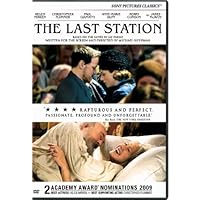
The film "The Last Station" focuses on the last few months of the novelist and writer Leo Tolstoy's family and social life. It stars Christopher Plummer as Tolstoy, Helen Mirren as his wife Sophya, James McAvoy as Tolstoy's new personal secretary Valentin, Kerry Condon as Valentin's charming and aggressive love interest, and Paul Giamatti as the leader of a group of "Tolstoyans" who wish to widely promote Tolstoy's ideals.
The film is set in early 20th century Russia, before the harsh realities of the Russian Revolution occurred in 1917 and thereafter (Tolstoy died in 1910). It was a time in history when Socialism was still an untried idealized conceptual form of government, and Tolstoy in his final years became more "radical" in his political, religious, and social philosophies.
The film raises 2 universal questions: 1) What do you do when the love of your life is in conflict with your highest priority ideals? And how does your treatment or mistreatment of the people closest to you, who have loved and cared for you the most, reflect on the quality of your ideals?
~Spoilers Ahead ~
In the final months of Tolstoy's life, he abandoned his wife of 48 years, Sophya. Before Sophya and Leo married, Sophya knew of his many sexual escapades he shared with her in his diaries. She knew he had fathered a child with one of the servant girls in his household. Nevertheless, she loved him and married him, giving him 13 children, 5 of whom died in childhood. The movie implies the question: At what point does your life become more than a solitary pursuit? After how many years of good treatment and co-dependence with those close to you does your life necessarily and deservedly become considerate of more than just your own priorities? Where should your deference be?
In 2009, it was widely reported that a British couple, both 98 years old, divorced. When a friend of mine heard of the story, she said, "What was the point?" It's a fascinating question. When do we ever stop wanting to define ourselves, our relationships, and our boundaries?
James McAvoy's character Valentin is a young, romantic idealist who wishes to promote Tolstoy's ideals. He runs into a young woman named Masha, who is less interested in layers of idealism, moral laws, and controls, and is more interested in physical and emotional feelings and connections. She quickly disarms his protests by being sexually aggressive with him. His ideals lose some of their zeal and absolutism when confronted with Masha's ability to naturally please him.
The film parallels Valentin's young love story with Tolstoy's love story with Sophya. Valentin is given a rare view, at a young age, to watch "ideals" clash with "love." Valentin, living in the house with Tolstoy, is able to watch a "great man" who is leading a "revolutionary" movement. He's able to watch how Tolstoy's focus on "the greater good" appears to harm and betray his wife, whose ideals are in conflict with his.
The film implies that Sophya did more than cleaning house and raising children while Tolstoy wrote. She tempered his novels' dialogues and added exceptional advice to his female portrayals. She transcribed and edited his major novels. She was not simply his wife, she was a co-creator of his greatest artworks.
The film is based on a 1990 novel "The Last Station" by Jay Parini. The title refers to many things, including the fact that Tolstoy died at a train station, fleeing his wife and estate. The title also implies the question: How will your actions in the last station of your life define your legacy? What will your last station leave behind for your immediate social circle and your community in general?
The screenplay is tight, moving, and never circuitous. The direction is solid and never distracting. The actors are excellent. I've heard the most praise for Mirren and McAvoy, but I found Plummer's and Condon's performances to be equally excellent. Plummer is in top form, less affected than in his younger roles. The film is a perfect length and the roles are not drawn as too overwrought or too "good" vs. "evil." We see the conflicting ideals of each of the main characters and we can easily understand the warfare that develops when their strong boundaries don't wish to co-exist.
I was hesitant to give this film a "number of stars" rating. But I appreciate it when other reviewers place some measurable rating on the films they review. When trying to come up with a correct number, I asked myself: "What was wrong with this film?" And I couldn't think of anything.
It's difficult for viewers to leave this film feeling good. This is not a film with a "feel good" ending. It's a real story about complex people who in the end desperately didn't want the same things. There are no clear winners in the final act of Tolstoy's life's story. But over time, I'm glad the work of his whole life has shined brighter and more prominently than his final chapter.

Click Here to see more reviews about: The Last Station (2009)

LAST STATION - DVD Movie

Buy NowGet 5% OFF

Click here for more information about The Last Station (2009)

Read More...

The Tudors: The Final Season Review

The Tudors: The Final Season
Average Reviews:

(More customer reviews)
Ironically enough, I've had a tumultuous relationship with The Tudors ever since it first started. It was an odd, kind of on-again, off-again relationship that ranged from near-fanatic fandom to downright apathy. I was a fan of Tudor historical fiction novels before the show began, and was more than ecstatic when I heard that Showtime was bringing the infamous Henry VIII to the screen with his many wives.
Sadly, the series didn't always deliver for me. The biggest issue for me, especially in the first season, was the incredible number of historical inaccuracies. Even though this always bugged me throughout the entire series' run, I had to just put it aside and accept the fact that this show is a Hollywood-ized version of Henry VIII's reign. Perhaps the aspect that got me through were the lush sets, impeccable art direction and absolutely gorgeous period costumes and accessories (especially on all of Henry's queens) -even though the costumes were more like Tudor style mixed with modern couture influences (okay, they looked cool).
In season four -titled by Showtime as "The Final Seduction" -Henry deals with war with France, lingering religious issues, his own fading health and of course, wives five and six -Katherine Howard and Catherine Parr, respectively. By this point, of course, Henry should be very rotund (300 pounds) and nearing the end of his life. Even though Jonathan Rhys Myers does get the aging treatment in the final episodes and they try to dress him up in large, heavy clothing to make him look a little bigger it's doesn't quite work-though it's at least something.
The season, overall, is relatively entertaining, though some episodes are better than others. The first half deals primarily with the young Katherine Howard, her affair with Thomas Culpepper (and Lady Rochford's well-documented involvement), the oddly included misadventures of Lord Surrey (a supposed distant relative of Katherine, who is a boring and pointless character) and Henry's continued political troubles. While I didn't find Kitty Howard particularly likable, Tamzin Merchant brings a strong liveliness to the character and emphasizes her age, her questionable moral character, and the fact that she is a completely inept queen.
After beheading poor Katherine Howard, the married Lady Latimer (Catherine Parr) grabs Henry's attention. Once her husband dies, she reluctantly marries Henry, and decides to use her new position to advance her strongly Protestant beliefs. Henry, meanwhile, departs to France for war and Catherine dodges accusations of heresy. After the war is over, Henry's health starts to decline until he dies.
The highlight of this season should have been the much-anticipated and strongly rumored "dream sequence" in the final episode that would feature Henry's deceased wives. Though this ended up being somewhat disappointing (only three of the wives appeared), it was good to see some of the ladies return to Henry's life at the end, but it just wasn't enough. The fact that I felt let down by this, as well as the somewhat anti-climatic ending, left me with an unsatisfied feeling at the end that even made me wonder why I had spent all of my time watching the show. You know what would have made this finale better? More Anne Boleyn -okay, maybe not, but I've seriously missed Natalie Dormer since she was knocked off at the end of season two. Not only was she a wonderful actress, but she portrayed a strong and compelling Anne who stands as the strongest and more interesting of Henry's wives, stealing the show in every scene she was in.
Thus ended my strange relationship with Showtime's The Tudors. Even though I had my doubts, I kept with it until the very end, and, unfortunately, wasn't satisfied but have to admit -journey getting there was entertaining and wonderfully done.

Click Here to see more reviews about: The Tudors: The Final Season

The Tudors presents the rarely dramatized, tumultuous early years of King Henry VIII\'s nearly 40 year, omnipotent reign (1509-1547).In addition to his famous female consorts and 20+ year marriage to Catherine of Aragon to the infamous dalliance with Anne Boleyn, the series delves in to Henry\'s most notable political relationship and the deconstruction of the Roman Catholic Church in England.

Buy NowGet 37% OFF

Click here for more information about The Tudors: The Final Season

Read More...

Persuasion (1995) Review

Persuasion (1995)
Average Reviews:

(More customer reviews)
Jane Austen wrote PERSUASION towards the end of her life, while in her final illness. Thus an atmosphere of bending weariness and quiet resignation pervades this tender romance, infused within provincial life in Regency England, swaying against the backdrop of the Napoleonic wars. I could not help but love this BBC film version unconditionally, so deftly are the gentle qualities of the novel brought forth.
As with her earlier novel, MANSFIELD PARK, Austen filled this story with subdued satire - intertwining a comedy of genteel manners with the unassailable decrees of the human heart. This is the story of Anne Elliot (Amanda Root): a single woman in her late 20's who, eight years previous, on the counsel of her patroness and late mother's friend, Lady Russell (Susan Fleetwood-who sadly died of cancer shortly after this film was made), had refused an offer of marriage from her true love, Captain Frederick Wentworth (Ciaran Hinds) on the grounds of his poor financial prospects.
Captain Wentworth returns to Anne's rather confined realm of society when his sister, Mrs. Croft, and her husband, an Admiral in the Navy (John Woodvine, of 1992's WUTHERING HEIGHTS) lease Anne's baronet father's estate, Kellynch Hall. Before she can join her father and elder sister Elizabeth (Phoebe Nicholls) in Bath, she must first spend a few weeks with her hypochondriac younger sister Mary, whose husband Charles' family, the Musgroves - parents Mr. and Mrs. Musgrove, and two younger sisters, Henrietta and Louisa - reside nearby. It is here that Anne becomes re-acquainted with her long-lost love, who's by now an advantageous match for any young woman, having made his prize fortune during the war. Wentworth initially fancies himself "a lost man" to the first attractive young lady who bestows upon him her "compliments to the Navy." To all appearances, Louisa Musgrove is that very lady...
Amanda Root and Ciaran Hinds, even though they lack the physical beauty distinctive in other Austen adaptations, express the gamut of suppressed emotions most flawlessly here. Ms. Root conjures all the feelings of empathy and affection with every delicate expression she makes. Mr. Hinds, whom I've seen in a number of other roles -including that of an overwrought Mr. Rochester in a 1997 adaptation of JANE EYRE - gives here what's quite likely the best performance of his career. His Wentworth's subtle yet barely suppressed anger hits Anne like a bombshell. The emotion is slow paced and very flowing - but it's nonetheless quite palpable.
The entire cast, in fact, gives every cause for high praise -- most notably Corin Redgrave (brother of Lynn and Vanessa) as Anne's vain and spendthrift father, Sir Walter Elliot, Sophie Thompson (sister of Emma Thompson) as Anne's self-centered younger sister Mary Musgrove, and Fiona Shaw (Mrs. Reed in 1996's JANE EYRE) as the indomitable Mrs. Croft - each are absolutely perfect in their respective roles.

Many a time, upon a weekend afternoon, I've placed this tape into my VCR and played it while occupied with various household chores. As ever and as always, this film offers up its many beauties, and they never fail to enchant me: the long walks through the pristine and stately New Forest - the excursions with the Navel men striding proudly along jetties of the shores at Lyme - the atmospheric turns about the drizzly sidewalks, the pump rooms, and the concert halls of Bath. Such are the scenes that eternally soothe a spirit ~

Click Here to see more reviews about: Persuasion (1995)

PERSUASION - DVD Movie

Buy NowGet 36% OFF

Click here for more information about Persuasion (1995)

Read More...

Coming Home (1998) Review

Coming Home (1998)
Average Reviews:

(More customer reviews)
I have read "Coming Home" twice and have listened to the audio tape several times, so when I saw that the novel was available on video I was delighted...I finally found it on VHS on sale and ordered it, just to see for myself, and watched it this past week. What a joy! I loved every minute of it, and the fact that it didn't cover every page of the book didn't bother me at all. Even "Little Women" switched Amy and Beth's position in the family in the 1949 version but it was still a wonderful movie. I am very glad that I have "Coming Home" in my video collection and plan to watch it again soon.

Click Here to see more reviews about: Coming Home (1998)

COMING HOME - DVD Movie

Buy NowGet 8% OFF

Click here for more information about Coming Home (1998)

Read More...

A Little Princess (1995) Review

A Little Princess (1995)
Average Reviews:

(More customer reviews)
"I am a Princess. All girls are. Even if they live in tiny old attics. Even if they live in rags. Even if they aren't pretty, or young, or smart, they're still princesses. All of us! Didn't your father ever tell you that? Didn't he?"
Well no. My Dad didn't call me a princess, and that's because I'm a guy. But after seeing this movie, I was really beginning to wish I was. "A Little Princess" is quite simply amazing. It is the most magical family movie there is. I just can't recommend it high enough. I saw this at the movie theater, 7 times and it is quite easily my favorite film of all time.
Set in 1914, "A Little Princess" tells the story of a girl called Sara who goes to a strict boarding school while her father from England goes to fight the War. The school is run by a mean spirited head teacher called Miss Minchin. From the start, Miss Minchin is jealous of Sara who considers herself to be a princess. After all, her Papa has told her that she will always be his little princess. Despite the harshness of Miss Minchin, Sara continues to fill those around her with magic as she tells stories to them of a beautiful princess and her prince.
The emotion begins early in this movie, firstly being when Sara and her Papa say goodbye as he goes into war. Midway through the movie Sara hears that her Papa has been killed in battle. I have to say, when I watched this I was gone. Ok I wasn't gone yet, but I was holding the tears in. Actress Liesel Matthews who plays Sara is so genuine, and director Alfonso Cuaron definitely brings out the best in her. It is at the end which is complimented by the music of Patrick Doyle, that I really did feel a few tears going by my face. It happened just after Sara realized she may truly have lost her father forever.
The DVD itself just has a trailer and it would be great if it had more extras, but the moie is just so wonderful that you have to buy this DVD. In addition, the subtle Dolby Digital 5.1 is just right for a movie such as this.
"A Little Princess" made my heart feel so much, and I really felt like a girl, getting upset over a family movie like this. I guess I was getting in touch with my inner princess. Maybe I am a princess after all.

Click Here to see more reviews about: A Little Princess (1995)

The beloved story from the author of the Secret Garden becomes 1995's best reviewed film. A young girl must rely on her wits and imagination when she is separated from her soldier father and sent to a strict boarding school. Year: 1995 Director: Alfonso Cuaron Starring: Eleanor Bron, Liam Cunningham, Liesel Matthews DVD Features:Production NotesTheatrical Trailer


Buy NowGet 62% OFF

Click here for more information about A Little Princess (1995)

Read More...

El Cid (Two-Disc Deluxe Edition) (The Miriam Collection) (1961) Review

El Cid (Two-Disc Deluxe Edition) (The Miriam Collection) (1961)
Average Reviews:

(More customer reviews)
It has been a very long wait indeed for a proper, high resolution 2 disc anamorphic DVD of this epic medieval tale of passion and chivalry. The final results are breathtaking. The transfer is stunning and the sound is rich and full. This is rousing entertainment on the grandest scale.
It's hard to understand why this film took so long to arrive on DVD. Perhaps, as some have suggested, the subject matter has been an issue in our over-sensitive, shrinking world of religious violence. Or our discomfort with nebulous concepts of love, forgiveness and peace. But most likely a matter of rights and licensing issues.
The relevance of this extraordinary film remains current and is a monumental artistic achievements of world cinema. On a personal level, this terrific film provoked me into thinking about how belief systems -- especially about the nature of God (or Allah) -- benefit or harm our world.
The essence of the conflict between warring Castilians and Moors and an invading Muslim threat is unflinching in the opening scene as the North African holy warrior Ben Yussuf quotes "the Prophet" as promising to conquer the world in the name of Allah.
But the real conflict is the idea that there can be peace -- and perhaps even love -- between those who hate. This is exemplified in the troubled and intimate story of Rodrigo (Charlton Heston) and Ximena (Sophia Loren). It begins simply enough with a knight on his way to meet his bride when destiny forces a detour.
El Cid, the legendary hero of Spain was a real person named Don Rodrigo Diaz de Bivar. He lived around 1035 A.D. Although he spent much of his time fighting on the side of the Moors, he became identified as the best incarnation of the true Castilian Christian spirit. His name came from the Arabic "sayyid" meaning "lord" or "chief."
Charlton Heston and Sophia Loren are perfectly cast as larger than life figures of flesh and blood. Their reported confllcts on-set probably added a degree of on-screen realism. They are wonderful together. Too bad Heston and Loren were not able to do a full, shared commentary at the time of the transfer.
Anthony Mann's direction is robust and true to the theme. The movie has a fine sense of composition that the terrific on-location cinematography only enhances. Numerous action-filled vistas fill the screen, richly detailed and beautifully photographed. No CGI elements can rival the texture of a real place captured on celluloid.
The incredible flow of stunning images and the magnificent Miklos Rozsa score are a reminder of what movies can do when they tackle a worthy tale and go all the way.
EL CID is about a real hero who selflessly followed his moral compass. It's also a reasonably true adapataion of the essence of the numerous medieval tales, plays and poems -- unlike the mangling of both poem and hero "Beowulf" in the recent movie of the same name.
Amazing that this magnificent paradox of a tale -- after all, El Cid was a warrior and peacemaker -- continues to be told for a thousand years.
The extras on the second disc include interesting featurettes on producer Sam Bronston, director Anthony Mann and composer Miklos Rozsa as well as vintage radio interviews with Heston and Loren and a "making of" documentary.
The last scenes are a fitting epitaph for Charlton Heston the man and the actor. His passing is truly the end of an era.
This great movie deserves a place in any digital library. Don't miss it.
Highest recommendation.
The 2 Disc Limited Collectors Edition is for a limited time only, comes in a box and contains a roadshow pressbook and vintage, miniature, lobby cards. The film itself and DVD extras are identical with the alternate consumer edition.

Click Here to see more reviews about: El Cid (Two-Disc Deluxe Edition) (The Miriam Collection) (1961)

Anthony Mann masterfully directs this classic tale of the 11th-century hero (Heston) who fought to unite Spain. Known as history’s "compassionate warrior," the film follows El Cid’s remarkable journey from peace-broker accused of treason to the King’s fighting champion, and later from exiled hero to legendary martyr.

Buy NowGet 24% OFF

Click here for more information about El Cid (Two-Disc Deluxe Edition) (The Miriam Collection) (1961)

Read More...

Across the Universe (2007) Review

Across the Universe  (2007)
Average Reviews:

(More customer reviews)
Julie Taymor once again uses her considerable innovative magic to create a film that not only is mesmerizingly beautiful to watch, but also a 'semi-documentary' about the world changes that occurred in the late 1960s and early 1970s as young people for the first time spoke out against the war in Vietnam, the death of Martin Luther King, and the senseless mayhem that extended from the battlefields of Vietnam to the streets of America, all set to the significant, timely music of the Beatles. It sounds like an impossible juxtaposition of themes and ideas, but in Taymor's hands it succeeds.
Opening in Liverpool, England (where the Beatles began their impact on music and thought) we met Jude (Jim Sturgess), a working class boy with the gifts of an artist who decides to set off on a sea journey to meet the father he has never known. Once in New York he meets Max (Joe Anderson) and Lucy (Evan Rachel Wood) who represent the wealthy class, but who both show roots of rebellion against the comfortable norm and an objection to the war that is festering like an abscess in the rice paddies of Vietnam. Jude meets his janitor father in a union that is anticlimactic, and in disappointment he falls in with Max, living the artists' life in the Village with free-wheeling singer Sadie (Dana Fuchs), her beau/guitarist JoJo (Martin Luther) and their newest tenant Prudence (T.V. Carpio), an Asian girl trying to find her place in a confusing world. The group eventually bond with music and rebellion mixed with free love and the passion that they can make a difference, while around them racial crises are at a peak and the draft tags many of the young men (including Max) for the war they cannot condone. From all of this turmoil the story builds to a climax leading to some very touching scenes that convey the spirit of the times and the overriding importance of love and understanding in a world torn apart by political and racial crises.
The cast is strong with each of the actors singing their own versions of various Beatle songs very well (the division between singing and spoken dialect favors the former). But the real magic comes from Julie Taymor's mixture of hallucinogenic visuals, wonderfully choreographed crowd scenes, and ingenious movement from reality scenes displayed on the television to the reactive scenes of the world as viewed through the eyes of the youths and the lyrics of the songs. It is at once touching in its ability to recreate a particular period of history and wholly entertaining in the inventive use of music/dance/visual effects/drama. This film is important now and will only increase in stature as a document of that troubled but exciting time in the history of the world. We can only wonder why the youth of today are not responding to the Iraq War in a like manner, or, more uncomfortable to consider, why we, now as adults, can't muster the same degree of distress about the myriad traumas that are still happening 'Across the Universe'. Grady Harp, April 08

Click Here to see more reviews about: Across the Universe (2007)

Across the Universe, from director Julie Taymor, is a revolutionary rock musical that re-imagines America in the turbulent late-1960s, a time when battle lines were being drawn at home and abroad. When young dockworker Jude (Jim Sturgess) leaves Liverpool to find his estranged father in America, he is swept up by the waves of change that are re-shaping the nation. Jude falls in love with Lucy (Evan Rachel Wood), a rich but sheltered American girl who joins the growing anti-war movement in New York's Greenwich Village. As the body count in Vietnam rises, political tensions at home spiral out of control and the star-crossed lovers find themselves in a psychedelic world gone mad. With a cameo by Bono, Across the Universe is "the kind of movie you watch again, like listening to a favorite album." (Roger Ebert, Chicago Sun-Times)

Buy NowGet 22% OFF

Click here for more information about Across the Universe (2007)

Read More...