Showing posts with label dead souls and dark alleys. Show all posts

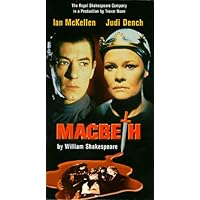
Macbeth / McKellen, Dench, Royal Shakespeare Company (1978) Review

Macbeth / McKellen, Dench, Royal Shakespeare Company  (1978)
Average Reviews:

(More customer reviews)
This production highlights the Christian v. pagan elements, and in other ways deals in opposites (men's v. women's perceptions, solid v. spirit worlds, etc.), but without beating you over the head with it. The witch scenes are amazing--the production borrows from Irish "bog people" imagery with the witches' stick puppets representing Macbeth's visions, with a little borrowing from Carlos Castaneda's peyote trips, and maybe the minimal "circle" staging of Equus. Minimal props and furniture; the actors carry it all the way, brilliantly. I can't imagine anyone doing a better, visceral, more committed job with Macbeth and Lady Macbeth than McKellan and Dench. It could sell huge--for a Shakespeare film--if only it wasn't probably too obviously a taped stage production (it doesn't try to be otherwise). A couple of turtlenecks among the costumes betray the 70's-era staging, but otherwise the costuming is great and doesn't date the production. If you a) are a fan of Ian McKellan and/or Judi Dench and b) appreciate great Shakespeare performances and want to be "in the know" on what's considered the definitive Macbeth staging of the past couple decades, this is the one.

Click Here to see more reviews about: Macbeth / McKellen, Dench, Royal Shakespeare Company (1978)


Buy NowGet 25% OFF

Click here for more information about Macbeth / McKellen, Dench, Royal Shakespeare Company (1978)

Read More...

John Wayne DVD Gift Set (The Shootist/ The Sons of Katie Elder/ True Grit/ El Dorado/ The Man Who Shot Liberty Valance) (1965) Review

John Wayne DVD Gift Set (The Shootist/ The Sons of Katie Elder/ True Grit/ El Dorado/ The Man Who Shot Liberty Valance) (1965)
Average Reviews:

(More customer reviews)
While a Western 'purist' would certainly prefer seeing a 'dream' boxed set of John Ford/John Wayne's 'Cavalry' trilogy, "Stagecoach", and "The Searchers" released together, the "John Wayne DVD Gift Set" is an excellent collection of some of the Duke's finest westerns from his last two decades.
The classic of the collection is "The Man Who Shot Liberty Valance", John Ford's 1962 'deconstruction' of the genre he'd helped to create. A visually simple, yet deeply layered tale of how a western legend was born, the film echoes Ford's "The Last Hurrah", as well as taking a tongue-in-cheek 'jab' at critics of his more idealized earlier westerns. While Jimmy Stewart, at 55, is far too old to play an idealistic young lawyer, his confrontations with desperado Lee Marvin, and pragmatic (yet ultimately doomed romantic) Wayne are terrific. And don't miss Edmund O'Brien's 'takeoff' on actor Thomas Mitchell, in support...Ford's directorial 'style' was never better than in this remarkable film.
"The Sons of Katie Elder" is an important film in Wayne's career, as it marked his 'comeback' after losing a lung to cancer. While much of his dialogue had to be 'looped', and oxygen was kept nearby throughout the filming, Wayne proved that he could still play an action hero believably. Certainly, he looked all of his 58 years, and the idea of Dean Martin being one of his brothers is farfetched, but when Wayne first appeared on the screen, 1965 film audiences stood and cheered...and his dominating presence still makes the film 'work', today.
"El Dorado" is, if you are unfamiliar with the film, simply a reworking of 1959's Hawks/Wayne classic, "Rio Bravo", but it stands very well on it's own merits, beginning with the terrific chemistry between Wayne and co-star Robert Mitchum. A very young James Caan offers a funny counterpoint to the two veteran stars, and wonderful character actor, Arthur Hunnicutt (who, for trivia fans, played Davy Crockett in 1955's "The Last Command"...thus making this a unique opportunity to see TWO Davy Crocketts in one film!) plays a rustic variation of Walter Brennan from the earlier film. With plenty of Howard Hawks' signature comraderie, the film is very entertaining.
"True Grit" is, of course, John Wayne's Oscar-winning role, as pot-bellied, one-eyed Rooster Cogburn. While many believe Wayne won for his career longevity rather than his performance, the film is, in fact, very entertaining and lyrical, and Wayne's portrayal is the glue that holds it together. Certainly, Glen Campbell offers a less-than-stellar performance, but it is more than compensated for by Kim Darby and Robert Duvall, and Wayne, guns blazing, reins clenched in his teeth, provides an image that has become classic.
Finally, there is "The Shootist", Wayne's final film. Shot as the Duke's health was declining, dramatically, the production was a difficult one, with director Don Siegel struggling to work with the ailing actor (Co-star Ron Howard would say he learned more about directing from this film, than any other). Because of the Duke's fragile condition, many friends took roles at far below their usual salaries to work with him a last time (including James Stewart, Richard Boone, and Lauren Bacall). The finished film is a labor of love, from the "Classic Wayne" film clips that open the story, to the final gunbattle, with Wayne's character, the cancer-ridden John Bernard Books, going out in a blaze of glory. It may not have been among Wayne's 'best' films, but it was certainly a most fitting end to his career.
It's easy to see why this is a worthy Wayne collection to own...But don't take my word for it; buy it, and see for yourself!


Click Here to see more reviews about: John Wayne DVD Gift Set (The Shootist/ The Sons of Katie Elder/ True Grit/ El Dorado/ The Man Who Shot Liberty Valance) (1965)

Legendary producer-director Howard Hawks teams with two equally legendary stars, John Wayne and Robert Mitchum, in this classic Western drama. Mitchum plays to perfection an alcoholic but gutsy sheriff who relentlessly battles the dark side of the wild West, ruthless cattle barons and crooked "businessmen." The Duke gives an equally adept performance as the sheriff's old friend who knows his way around a gunfight. Filled with brawling action and humor, El Dorado delivers the goods. James Caan and Ed Asner co-star.Ranking with Stagecoach as one of the greatest of its genre, The Man Who Shot Liberty Valance is the modern-day Western to beat all Westerns. John Ford, whose very name is synonymous with "Westerns," directed the ideal cast. Jimmy Stewart plays the bungling but charming big-city lawyer determined to rid the fair village of Shinbone of its number one nuisance and Bad Man: Liberty Valance (Lee Marvin). And as if all that weren't enough, the biggest star that ever aimed a six-shooter plays the Man of the title: John Wayne. Super-sincere Stewart and rugged rancher Wayne also share the same love interest (Vera Miles). One gets the gunman but the other gets the gal.Afflicted with a terminal illness, John Bernard Brooks (John Wayne), the last of the legendary gunfighters, quietly returns to Carson City for medical attention from his old friend Dr. Hostetler (James Stewart). Aware that his days are numbered, the troubled man seeks solace and peace in a boarding house run by a widow (Lauren Bacall) and her son (Ron Howard). However, it is not Brook's fate to die in peace, as he becomes embroiled in one last valiant battle.Katie Elder bore four sons. The day she is buried they all return home to Clearwater, Texas, to pay their last respects. John Wayne is the eldest and toughest son, the gunslinger. Tom (Dean Martin) is good with a deck of cards and good with a gun when he has to be. Matt (Earl Holliman) is the quiet one - nobody ever called him yellow...twice. Bud (Michael Anderson, Jr.) is the youngest. Any hope for respectability lies with him. Directed by Henry Hathaway (True Grit), an acknowledged master of the Western, the story has a dual theme: not only is this a he-man's story, but it is also a drama of the maternal influence of Katie Elder, movingly portrayed from beginning to conclusion.In 1970, John Wayne won an Academy Award. for his larger-than-life performance as the drunken, uncouth and totally fearless one-eyed U.S. Marshall, Rooster Cogburn. The cantankerous Rooster is hired by a headstrong young girl (Kim Darby) to find the man who murdered her father and fled with the family savings. When Cogburn's employer insists on accompanying the old gunfighter, sparks fly. And the situation goes from troubled to disastrous when an inexperienced but enthusiastic Texas Ranger (Glen Campbell) joins the party. Laughter and tears punctuate the wild action in this extraordinary Western which features performances by Robert Duvall and Strother Martin.

Buy Now

Click here for more information about John Wayne DVD Gift Set (The Shootist/ The Sons of Katie Elder/ True Grit/ El Dorado/ The Man Who Shot Liberty Valance) (1965)

Read More...

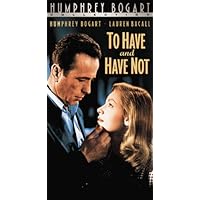
To Have & Have Not (1945) Review

To Have and Have Not  (1945)
Average Reviews:

(More customer reviews)
The summer of 1940 in Martinique as people began to choose sides is the setting for another Howard Hawks masterpiece. William Faulkner, who had adapted Raymond Chandler's complex novel for the director's other Bogart screen classic, "The Big Sleep," expanded a thin Hemingway story with writing partner Jules Furthman into another. This is sort of "Casablanca" with grit rather than gloss, and is just as enjoyable. "To Have and Have Not" does, in fact, outshine that film with its upbeat ending, and marks the real contrast between the two films, despite their similarities.
Bogart is Harry Morgan, trying to stay neutral about the local politics while he and his pal Eddie (Walter Brennan) take tourists ocean fishing in the waters of Martinique. His pal Frenchy (Marcel Dalio) wants him to use his boat to pick up a couple that will put him square in the middle of all that's going on both in Martinique and the rest of the world as the Germans make their move across the globe.
Morgan is fending off getting involved just fine until his latest fishing customer gets knocked off by accident before he can pay up. Complicating things further for Morgan is a newcomer named Marie Browning (Lauren Bacall) who sort of attaches herself to him from the moment they meet. She has come from Brazil by way of Trinidad and ends up in Martinique only because she doesn't have money to go any further. They seem a perfect fit despite all the sparring between them; a point driven home by her response to Eddie's question about bees. The viewer knows at that moment that she and Harry are a match made in Hollywood heaven.
Brennan is just terrific as Harry's old pal in constant need of a drink to keep the shakes at bay. He thinks he's looking after Harry when in fact it's Harry who's looking after him. The trademark male world of Howard Hawks is much in evidence here, as Bogart's autonomy begins to crack only when he finds his match in Bacall. Like many of Hawks' characters, Morgan lives by his own code and his own rules, and only breaks them out of loyalty to someone else. Another Hawks trademark of the sizing up of people from the inside out is also much in evidence here. Bogart and Bacall never even speak the other's name in this film: she calls him "Steve" and he refers to her as "Slim" throughout the entire film.
When Harry finally agrees to pick up Frenchy's pals in the Resistance to earn enough money to get Slim home, he gets more than he bargained for in more ways than one. It convinces Slim to stay on because she now knows for sure that "Steve" is the right guy. She gets a job singing for the piano player at the Hotel Martinique, Cricket (Hoagy Charmichael). And after a patrol boat takes a potshot at one of his passengers, his very beautiful wife begins to warm up to Harry in a big hurry, causing a bit of jealousy on Slim's part. Doloros Moran is very nice and quite pretty as that wife, Hellene de Bursac.
There are a ton of great exchanges between Bacall and Bogart here, the most famous being the "just whistle" scene. There are many others equally as good, however, including an exchange about strings that has Bacall walking around Bogart, and a great line from Bacall about walking home if it weren't for all that water. It is this latter exchange, and one other about Slim's lack of a reaction when being slapped that Hawks uses to highlight the personal baggage both Harry and Marie are bringing to the table.
A young Bacall looks gorgeous in gowns by Milo Anderson, and Sid Hickox's photography gives the film a real feel of a tiny island with palm trees lining the streets. Bogart's Harry will eventually engage in the fight when he decides he likes the people on one side and doesn't like the people on the other side. It is very much both a Hawks and Bogart type moment, the personal moral code of the anti-hero coming fully into play.
This is a fun film with great characters, lots of atmosphere, and an ending the polar opposite of "Casablanca." The song "How Little We Know" from Hoagy Charmichael and Johnny Mercer never amounted to much compared to the more famous "As Time Goes By" from "Casablanca," but works nicely with the mood Hawks created for his second film with Humphrey Bogart and Lauren Bacall. If you're looking for a big dose of Bogie and Bacall, and want the kind of ending "Casablanca" didn't have, then "To Have and Have Not" is a sure bet to please you. A fine film and a true screen classic.

Click Here to see more reviews about: To Have & Have Not (1945)


Buy NowGet 10% OFF

Click here for more information about To Have & Have Not (1945)

Read More...

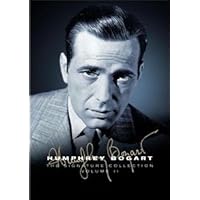
Humphrey Bogart - The Signature Collection, Vol. 2 (The Maltese Falcon Three-Disc Special Edition / Across the Pacific / Action in the North Atlantic / All Through the Night / Passage to Marseille) (1944) Review

Humphrey Bogart - The Signature Collection, Vol. 2 (The Maltese Falcon Three-Disc Special Edition / Across the Pacific / Action in the North Atlantic / All Through the Night / Passage to Marseille) (1944)
Average Reviews:

(More customer reviews)
"Humphrey Bogart - The Signature Collection, Vol. 2" may be as entertaining a collection of Bogart films, as he emerged as a major WB star, as you'll ever find. They run the gamut of early classic noir, espionage, action/adventure, broad comedy, and moody morality tale, each exceptional, and stamped with the distinctive Bogie 'style'.
"The Maltese Falcon" (1941) - One of the earliest examples of the style that became known as Film Noir, John Huston's crime classic has been described as the finest detective film ever made, and certainly deserves the title! The second teaming of the director and star ("High Sierra" had been released earlier that year), both films had a common history, as George Raft 'passed' on both properties (not wanting to work with an 'untested' director), and the films would launch Bogie into the superstardom that had eluded him in the 30s.
Dashiell Hammett's tale of amoral detective Sam Spade, the murder of his partner, and the offbeat collection of characters in pursuit of a fabulous, jewel-encrusted statue, had been filmed twice by WB in the thirties, but never truly captured the 'flavor' of the novel. Huston, with his eye for characterization, and use of light and shadow, not only got it 'right', but popularized a new genre, of beat-up, world-weary anti-heroes with their own 'codes of honor', duplicitous women, and endings where things seldom end 'happily ever after'. While Film Noir wouldn't become a film staple until after WWII, it seldom got better than this!
I could say MUCH more, but this 3-Disc collection says it FAR better...it is, simply, a MUST OWN!
"Across the Pacific" (1942) - The next teaming of Huston and Bogie may be one of the most enjoyable espionage comedy/dramas of WWII, made even more entertaining by the film's back story; Huston, who wanted, desperately, to get into WWII, managed to leave for the war after writing Bogie into 'certain-death' film climax, without a resolution! While the director and star thought it was hilarious, poor Vincent Sherman, called in to finish the film, probably lost a lot of sleep tying everything up!
Re-teaming the star with "Falcon" co-stars Mary Astor and Sydney Greenstreet (who are both superb), the film, despite obvious flaws, is eminently 'watchable', and remains one of Bogie's most popular films.
"Action in the North Atlantic" (1943) - One of WB's best wartime action/adventure films, Lloyd Bacon's tribute to the merchant marine is a marvelous ensemble piece, with great acting compensating for obvious stereotypes. Bogie isn't the focus of the story, but a team player, on a ship commanded by Raymond Massey (in one of his warmest, most ingratiating portrayals). This film has a famous back-story, as well; watching their stunt men performing a dive off a burning ship, Bogie and Massey, both a bit intoxicated (being 'off-duty'), started making bets on which stunt-man was braver...one thing led to another, until the stars, themselves, made the dive (which must have driven Jack Warner into apoplexy!)
"All Through the Night" (1942) - Humphrey Bogart made few comedies (mostly later in his career), but this 'Damon Runyon-Types vs. the Nazis', filmed just after "Falcon", is breezy fun, if totally outrageous! The story of gambler/promoter Bogie, investigating (for his mother!) strange goings-on, getting framed for murder, and discovering a Nazi cell in Manhattan with evil intentions, is so loaded with funny one-liners that you never miss the lack of logic.
Supported by a cast of GREAT comic actors (including William Demarest, Frank McHugh, Jackie Gleason, and Phil Silvers), hiss-able villains (headed by Conrad Veidt and Peter Lorre, who would re-team with Bogie in "Casablanca"), and lovely Kaaren Verne (the future Mrs. Peter Lorre) for romance, "All Through the Night" may not be a classic, but is FABULOUS fun!
"Passage to Marseille" (1944) - After the huge success of "Casablanca", WB attempted to find similar vehicles for Bogie, to attempt to recapture the magic. Some would work very well ("To Have and Have Not"); most didn't. This was one of the misfires, but it does offer "Casablanca" co-stars Claude Rains, Sydney Greenstreet, Peter Lorre, and Helmut Dantine, in a tale of Devil's Island escapees, dealing with Vichy plots, finding their 'souls', and rejoining the fight to rid France of the Nazis. Atmospheric, if occasionally slow-moving, the film is not among Bogie's best, but is certainly watchable, and has WB's distinctive 'gloss'...
Quite a collection!

Click Here to see more reviews about: Humphrey Bogart - The Signature Collection, Vol. 2 (The Maltese Falcon Three-Disc Special Edition / Across the Pacific / Action in the North Atlantic / All Through the Night / Passage to Marseille) (1944)

Includes:The Maltese Falcon (Three-Disc Special Edition), Across the Pacific, Action in the North Atlantic, All Through the Night, and Passage to Marseille.

Buy Now

Click here for more information about Humphrey Bogart - The Signature Collection, Vol. 2 (The Maltese Falcon Three-Disc Special Edition / Across the Pacific / Action in the North Atlantic / All Through the Night / Passage to Marseille) (1944)
Read More...

TCM Archives - Forbidden Hollywood Collection, Vol. 2 (The Divorcee / A Free Soul / Night Nurse / Three on a Match / Female) Review

TCM Archives - Forbidden Hollywood Collection, Vol. 2 (The Divorcee / A Free Soul / Night Nurse / Three on a Match / Female)
Average Reviews:

(More customer reviews)
March will mark the release of some PreCode gems on this Forbidden Hollywood set, in particular for Norma Shearer fans.
"The Divorcee" (1930). Ms. Shearer's Academy award winning performance as Jerry in the role her husband, Irving Thalberg, initially thought she wasn't sexy enough to play (a few wonderfully seductive portraits, courtesy of Mr. Hurrell were enough to prove his doubts had no basis) is excellent. Great minor role by her future leading man, Robert Montgomery, as well.
"A Free Soul" (1931). Ms. Shearer is Jan Ashe; Mr. Lionel Barrymore (in his Academy Award winning role) is her alcoholic, lawyer father, Stephen Ashe. Young Clark Gable made his cinematic bones with his role as mob heavy Ace Wilfong. For those who've only known Norma for "Marie Antoinette" and "The Women", be prepared for an entirely different actress. Ms. Shearer, resplendent in her erotic white gown, is pure bombshell.
"Night Nurse" (1931). Barbara Stanwyck was at her best in PreCodes (though I think "Illicit" is a better film) and Joan Blondell packs a punch as her nurse friend. This film has a plot to kill children, a nymphomanical mother, drug references and Clark Gable mobbing up again as Nick, the chauffeur.
"Three on a Match"(1932). Anne Dvorak, Joan Blondell and Bette Davis play the three ladies who share the karmic match. One's a bad girl who turns her life around (Blondell); another one is a good girl who remains true to her goodness (Bette Davis); the third has all the luck, money and the love of a faithful husband (Dvorak), but throws it all away for booze, drugs and shady men. Humphrey Bogart, also making his start as a mob heavy, plays her connection/kidnapper, Harve while the charming Warren Williams plays her abandoned husband, Robert.
"Female" (1933). The exceptionally talented Ruth Chatterton plays Alison Drake, president of a successful automobile factory, with a penchant for having trysts with her male secretaries and promptly transferring them to the company's Canadian office. Enter George Brent (Ms. Chatterton's husband off-screen at the time) as designer Jim Thorn and the sparks begin.
Commentary, trailers and a new documentary make this a must-own for fans of Pre-Code cinema. Let's get working on set 3, why don't we? Classic film fans (myself included) are only glad to spend those preorder dollars for Pre-Code releases.

Click Here to see more reviews about: TCM Archives - Forbidden Hollywood Collection, Vol. 2 (The Divorcee / A Free Soul / Night Nurse / Three on a Match / Female)

THE DIVORCEE (1930): After several blissful years of marriage a woman catches her husband in a compromising position and forces him to confess his infidelities Her solution to the problem is to then try to match him tryst for tryst. Based on the 1929 Ursula Parrott novel "Ex-wife," this highly controversial story was first published anonymously, with the author’s name added only after thousands of copies were sold. A FREE SOUL (1931): Lionel Barrymore shines as Stephen Ashe, a brilliant alcoholic lawyer who successfully defends dashing gangster Ace Wilfong (Clark Gable) on a murder charge only to find that his headstrong daughter, Jan (Norma Shearer), has fallen in love with his client. Jan, a fun-loving socialite seeking freedom from her blue-blood upbring, is only too eager to dump her aristocratic boyfriend (Leslie Howard) for the no-good gangster. Barrymore gives a remarkable Oscar-winning performance culminating in a legendary courtroom scene that is powerful and deeply moving. THREE ON A MATCH (1932): Childhood friends Mary Keaton, Ruth Wescott and Vivian Deverse reunite ten years after high school. Mary is now a chorus girl, level-headed Ruth has a job as a secretary, and sexy Vivian is on the verge of deserting her wealthy husband Henry Kirkwood and their baby in favor of a glamorous gangster. FEMALE (1933): In Michael Curtiz's romantic comedy FEMALE, Ruth Chatterton plays Alison Drake, the iron-fisted president of a motorcar company. Alison oversees the daily operations of her male employees with a predatory gaze and frequently exercises her right to engage with them in any way she deems fit. She meets her match in an equally strong-minded new employee, Jim Thorne (George Brent), and the two engage in a smoldering, contentious, sexually charged duel. NIGHT NURSE (1931): William Wellman's NIGHT NURSE is a sassy, unsentimental comedy about a private pediatric nurse named Lora Hart (Barbara Stanwyck) who, after applying as an apprentice in a family home, discovers there is a plot afoot to starve her two rich, fat, young charges to death. The culprit is the family's chauffeur, Nick (Clark Gable), a villain who plans to marry the kids' dissolute mother and make off with their trust fund. THOU SHALT NOT: SEX, SIN AND CENSORSHIP IN PRE-CODE HOLLYWOOD (2008): Over seventy years later, they've lost none of their power to shock, entertain, and titillate. So-called "pre-Code" movies remain among the most vital films America has ever produced. But why were these films so much more sexually free and socially critical than what came before or after? Who created the Code, and what did it forbid? And why did it finally become a Hollywood commandment? The answer is a fascinating mix of scandal, big business and social history - a unique collision of events that resulted in one of the most dynamic - and delicious - periods in Hollywood history.

Buy NowGet 25% OFF

Click here for more information about TCM Archives - Forbidden Hollywood Collection, Vol. 2 (The Divorcee / A Free Soul / Night Nurse / Three on a Match / Female)

Read More...

No Way Out (Fox Film Noir) (1950) Review

No Way Out (Fox Film Noir) (1950)
Average Reviews:

(More customer reviews)
Joseph L. Mankiewicz's able direction accurately chronicles the ugliness of racism as seen through the eyes of the characters in the flick "No Way Out".
Sidney Poitier is his first starring role plays dedicated and idealistic physician Dr. Luther Brooks. Poitier is working the prison ward of the county hospital when Ray Biddle played by Richard Widmark and his brother Johnny are brought in. They both had been shot in the leg by cops during a gas station heist.
Widmark, a hellacious bigot, balks when he and his brother are examined by a black doctor.
Poitier becomes suspicious that brother Johnny Biddle is in much more dire straits than from just a leg wound. Fearing brain damage he performs a spinal tap but the patient expires during the procedure. Widmark immediately blames Poitier for killing his brother. Poitier with full support of his boss Dr. Wharton played by Stephen McNally, requests an autopsy to prove the suspected presence of a brain tumor. Widmark however refuses.
The brother's ex-wife Edie played by Linda Darnell is coaxed by the doctors into changing Widmark's mind. The plot plays out with the despicable Widmark using a third brother to mobilize their lowlife racist friends to attack the local black neighborhood. A racial riot ensues and the hospital becomes full of victims but an unsatisfied Widmark is still out for blood.
"No Way Out" is a very disturbing look at the 1950's version of racism. The picture is not a very pretty one. Both Widmark playing the mad dog racist and Poitier the moralistic physician gave very effective performances.

Click Here to see more reviews about: No Way Out (Fox Film Noir) (1950)

Nominated for the 1950 Oscar® for Best Writing, Story and Screenplay, this intense drama about racial hatred pulls no punches.When a white patient in a hospital dies under the care of a black intern (Sidney Poitier), the victim?s racist brother (Richard Widmark) seeks to destroy the doctor?s career. Although the hospital?s idealistic Chief Resident (Stephen McNally) tries to diffuse the escalating tension, the victim?s ex-wife (Linda Darnell) seems to go along with the vengeance-seeker?until she realizes she?s on the wrong side.

Buy NowGet 10% OFF

Click here for more information about No Way Out (Fox Film Noir) (1950)

Read More...

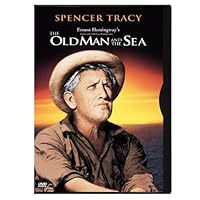
The Old Man and the Sea (1958) Review

The Old Man and the Sea (1958)
Average Reviews:

(More customer reviews)
Spencer Tracy gives a powerful performance as Santiago, the desperate old fisherman who must struggle to subdue and then keep the giant marlin that represents his salvation. Director John Sturges and screenwriter Peter Viertel retain much of Ernest Hemingway's symbolism, making of Santiago a Christ-like figure. A more apt Biblical analog might be Job; like him, Santiago endures the indignities and strife thrust upon him, but perseveres and endures while retaining his appreciation of nature and simple pleasures./
There is a lot of voice-over narration in this film. In addition to playing Santiago, Tracy reads excerpts from the novel to deepen and comment upon the action. In most cases, I would be annoyed by such pervasive intrusion, but it makes sense here because Santiago spends so much time alone. In addition, since the narration is drawn directly from the novel, it provides the added pleasure of a wonderful actor performing Hemingway's deceptively simple prose.


Click Here to see more reviews about: The Old Man and the Sea (1958)

An old man catches a magnificent marlin and must battle the elements, the sea and sharks to get his catch home.Genre: Feature Film-DramaRating: NRRelease Date: 13-NOV-2001Media Type: DVD

Buy NowGet 22% OFF

Click here for more information about The Old Man and the Sea (1958)

Read More...

Gilda (1946) Review

Gilda (1946)
Average Reviews:

(More customer reviews)
Rita Hayworth and Glenn Ford star in Gilda, a noir thriller set in Buenos Aires. Ford plays Johnny, a down on his luck gambler who is picked up by a casino owner. Johnny quickly becomes the casino owner's right-hand man--with a pact that women and gambling don't mix. Then Johnny's boss comes back from a trip with a new wife, Gilda,played incandescently by Rita Hayworth. Gilda is a typical noir femme fatale. She acts fast and loose but is actually just trying to get her guy jealous. Of course, her guy isn't her husband--its Johnny.
This odd little story is highly likeable for about three quarters of the film, when it makes a strange detour. Fortunately for us, the story gets right back on track at the end.
Ford does a good job as the loyal and jealous Johnny. He is vibrant, athletic and serious. Hayworth's beauty glows and gleams. She is given quite a few song and dance numbers. Her dancing is talented but strangely loose limbed. The movie steams with chemistry between Ford and Hayworth which is fortunate because the plot is more than a little cockeyed. The filming is gorgeously contrasted black and white with the requisite shadowy interiors.

Click Here to see more reviews about: Gilda (1946)

GILDA - DVD Movie

Buy NowGet 20% OFF

Click here for more information about Gilda (1946)

Read More...

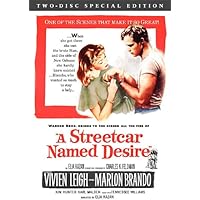
A Streetcar Named Desire (Two-Disc Special Edition) (1951) Review

A Streetcar Named Desire (Two-Disc Special Edition) (1951)
Average Reviews:

(More customer reviews)
As a playwright, Tennessee Williams was to the South what William Faulkner was as a fiction writer: a creative genius who revolutionized not only the region's arts scene and literature but that of 20th century America as a whole, bringing a Southern voice to the forefront while addressing universally important themes, and influencing and inspiring generations of later writers.
Pulitzer-Prize-winning "A Streetcar Named Desire" dates from the peak of Williams's creativity, the period between 1944 ("A Glass Menagerie") and 1955 ("Cat on a Hot Tin Roof," his second Pulitzer-winner). After its successful 1947 run on Broadway, "Streetcar" was adapted into a screenplay by Williams himself for this movie produced and directed by Elia Kazan, starring the entire Broadway cast except Jessica Tandy, who was replaced by the star of the play's London production, Vivien Leigh. The piece takes its title from one of the New Orleans streetcar lines that protagonist Blanche DuBois (Leigh) rides on her way to the apartment of her sister Stella (Kim Hunter), foreshadowing her later path, from (ever-unfulfilled) Desire to Cemetery (death, or the loss of reality) and a street called Elysian Fields, like the ancient mythological land of the dead.
Although Blanche is the person most visibly engaging in deception (of herself and others), almost everyone of the characters suffers loss after a brutal reality check: Stella, who hasn't been back home for years, first learns from Blanche that their genteel home Belle Reve (literally: "beautiful dream") is "lost" - although in what manner precisely Blanche doesn't specify, which immediately raises the suspicion of Stella's husband Stanley (Marlon Brando) - only to later hear from Stanley that under the veneer of Blanche's appearance as a delicate Southern lady lies a promiscuous past, and the true circumstances of her ouster from her job and ultimately from their home town were not as Blanche would have Stella believe. Stanley's friend Mitch (Karl Malden), who despite their disparate social backgrounds intends to marry Blanche after they are drawn to each other by their mutual need for "somebody" in their life, is similarly disillusioned by Stanley, and subsequently by Blanche herself when he insists on seeing her in bright light instead of the dim light of dancehalls and of the paper lamp she has insisted on hanging over Stella and Stanley's living room lamp, neither able to face the effects of age and a profligate lifestyle herself nor willing to reveal them to others. And Blanche's own loss of innocence, finally, set in years earlier, when she found her young husband in bed with another man and he committed suicide after she publicly reproached him. "Nobody sees anybody truly but all through the flaws of their own egos. That is the way we all see each other in life," Tennessee Williams says about "A Streetcar Named Desire" in Kazan's 1988 autobiography "A Life;" and in a letter opposing the movie's censoring before its release he described the story as being about "ravishment of the tender, the sensitive, the delicate, by the savage and brutal forces of modern society."
The brute, of course, is Stanley, who not only becomes the catalyst of Blanche's fate and the destroyer of Stella's, Mitch's and Blanche's own illusions, but is her antagonist in everything from background to personality: Where she is a fading belle dreaming of days gone by he is all youthful virility, a working-class man living in the here and now; where she is refined he is crude, and where she engages in pretense, he tears down the facade behind which she is hiding. The conversation during which Stanley tells Stella about Blanche's past is pointedly set against Blanche's humming the Arlen/Harburg tune "It's Only a Paper Moon," which sees love transforming life into a fantasy world, which in turn however "wouldn't be make-believe if you believed in me." Yet, as portrayed by Marlon Brando, who with this movie stormed into public awareness with his unique and volcanic approach to acting, Stanley is no mere vulgar beast but a complex, often controversial character, despite his brutal streak almost childishly dependant on his wife and frequently hiding his own insecurities under his raw appearance (thus putting up a certain front as well, but unlike Blanche's, a socially acceptable, even common one). Ever the method actor, Brando reportedly stayed in character even during filming breaks; much to the disgust of Vivien Leigh, for whom lines like "[h]e's like an animal. ... Thousands of years have passed him right by and there he is: Stanley Kowalski, survivor of the stone-age, bearing the raw meat home from the kill in the jungle" must consequently have come from the bottom of her heart.
In early 1950s' society, "Streetcar" was considered way too risque - even downright sordid - to be presented to moviegoing audiences without severe censorship, which Williams and Kazan were only partly able to fight. One of the most substantial changes made in the adaptation was that at the end of the movie Stanley is punished for his brutality towards Blanche, whereas in the play's cynical original ending he is the only character experiencing no loss at all; indeed seeing his world restored after Blanche's exit. Since Kazan's suggestion to produce two alternate versions (one to please the censors, one in conformity with Williams's play) was rejected, even the 1993 "Original Director's Version" retains its altered, censorship-induced ending. Therefore, the play will forever constitute the last word on Williams's intentions. But even in its censored version this movie was a deserved quadruple Oscar- and multiple other award-winner (albeit undeservedly not for Brando). It has long-since become a true classic: a cinematic gem of first-rate direction and superlative performances throughout.
And so it was I entered the broken world
To trace the visionary company of love, its voice
An instant in the wind (I know not whither hurled)
But not for long to hold each desperate choice.
Hart Crane, "The Broken Tower": Preface to the published version of Tennessee Williams's play.
Also recommended:
Tennessee Williams: Plays 1937-1955 (Library of America)
Tennessee Williams: Plays 1957-1980 (Library of America)
Tennessee Williams Film Collection (A Streetcar Named Desire 1951 Two-Disc Special Edition / Cat on a Hot Tin Roof 1958 Deluxe Edition / Sweet Bird of Youth / The Night of the Iguana / Baby Doll / The Roman Spring of Mrs. Stone)
Tennessee Williams' The Glass Menagerie (Broadway Theatre Archive)
The Rose Tattoo
Suddenly, Last Summer
Baby Doll
This Property Is Condemned
Tennessee Williams' Dragon Country (Broadway Theatre Archive)

Click Here to see more reviews about: A Streetcar Named Desire (Two-Disc Special Edition) (1951)

STREETCAR NAMED DESIRE:SPECIAL EDITIO - DVD Movie

Buy NowGet 63% OFF

Click here for more information about A Streetcar Named Desire (Two-Disc Special Edition) (1951)

Read More...

The Trojan Women Review

The Trojan Women
Average Reviews:

(More customer reviews)
Ancient Greek plays with all their dramatic devices and often an emphasis on static speeches by the actors and the chorus often do not translate well to the screen. Euripides' "The Trojan Women," however, is an exception to the rule. What makes this production work is the fine acting by most of the performers as well as the beautiful language, though in translation, of Euripides.
The plot is simple and straight forward. Queen Hecuba (Katharine Hepburn), her now crazed daughter Cassandra (Genevieve Bujold), her daughter-in-law Andromache (Vanessa Redgrave) and a host of other Trojan women are now at the mercy of the Greek victors. The play builds as one catastrophe after another befalls these women. Cassanda will be the wife of Agammemnon, Andromache will go with the son of Achilles, and Hecuba will become the slave of Odysseus-- or as Hecuba so aptly puts it, "Anguish heaped upon anguish."
The Greek chorus-- or in this instance I suppose we must call them the "Trojan Chorus" works well. Irene Papas plays a different sort of Helen than we see through other writers' eyes. Here she is unbowed, even as she awaits her fate from the hands of her wronged husband Menelaus. In a quite wonderful scene, after Helen has made her pitch to him to spare her life, Hecuba delivers the great lines: "Kill her, Menelaus." Ms. Hepburn has a lot of such passages. I remember from having seen the movie when it was released in 1971 her lines: "Kindness unwanted is unkindness."
The theme is obvious. Wars always hurt the women and children most-- Andromache's son almost steals the movie, by the way-- and while the weaponry and locales may change, war in 2005 is not that much different than it ever was, a sad, sobering thought.

Click Here to see more reviews about: The Trojan Women

TROJAN WOMEN - DVD Movie

Buy NowGet 10% OFF

Click here for more information about The Trojan Women

Read More...

Mr. Klein Review

Mr. Klein
Average Reviews:

(More customer reviews)
For those who have seen all of Joseph Losey's significant films, MR. KLEIN is the greatest after THE SERVANT. Some even call MR. KLEIN Losey's finest achievement. It's telling of our fragmented film culture that such an accomplished work of art remains unknown, even to many serious film buffs. For years, we had to settle for an English-dubbed, panned & scanned VHS tape. But the greatness of MR. KLEIN showed through even that medium.
Now the film is available on a high-quality DVD from Home Vision (which manufactures Criterion DVDs). The transfer is very fine, with the broad color pallette ringing out. And the widescreen aspect of the film can be appreciated by many who have never seen it look so good.
MR. KLEIN is a work of which its director should have been proud. It's intelligent, intriguing, moving, funny, and beautiful. Like THE SERVANT, it has at its center an ambiguous hero by whom one is, at turns, repelled and attracted.
This may also be the greatest acting achievement of Alain Delon. The charismatic French actor's still-stunning good looks sometimes can distract from appreciating his genuine talent. Delon probably never gave a bad performance in any film. But MR. KLEIN provides him with a wide range and depth that he is more than capable of handling. It's mostly a quiet performance, with few outbursts. Delon is required to react, which he does brilliantly at several points, or to express the meaning of scene through posture and facial expression alone. One subtle example is the scene early on, where the mistress is on the bed in the background, wondering if she should get up. Delon is seated at his desk, half-listening to her trivialities. He has far more pressing issues on his mind. The actor perfectly conveys the ambivalent, trapped situation through small body gestures and tone of voice. When he finally rises to address the mistress's concerns, his forced tone is also exactly right for the moment. Later, Delon plays Klein's mixture of desperation and arrogance with so much conviction, it's easy to forget he is, after all, acting.
MR. KLEIN is a film of rich interiors, and eye-catching, but not ostentatious, location shooting. It looks tremendous on DVD and it can leave the viewer devastated, but undeniably impressed by the genius of Joseph Losey and Alain Delon.
A trailer for MR. KLEIN is also included

Click Here to see more reviews about: Mr. Klein

Both a thriller and a Kafkaesque dissertation on identity, Joseph Losey's Mr. Klein stars Alain Delon (Le Samorai, Le Cercle rouge) as Robert Klein-a charming and unscrupulous art dealer in Nazi-occupied France. As Jews flee Paris, Klein exploits them, preying on their desperation by buying their valuables at a fraction of their worth...until he finds his name is shared by a Jewish criminal who is a member of the anti-Nazi resistance. Klein reports this to the authorities only to find he is uncontrollably sinking into the quicksand of mistaken identity. Co-starring Jeanne Moreau (La Femme Nikita), Mr. Klein is an award-winning suspense classic that studies the ever-changing relationship between victim and oppressor.

Buy Now

Click here for more information about Mr. Klein

Read More...

Gone With the Wind (1941) Review

Gone With the Wind  (1941)
Average Reviews:

(More customer reviews)
It seems like a 'new, improved' edition of "Gone With the Wind" has appeared every couple of years, offering the 'ultimate' in picture and sound reproduction, and extras. It can become expensive keeping up, and frustrating (much like buying a classic Disney DVD, when you know a more complete "Special Edition" will soon render your "First Time on Video" copy obsolete), but the new GWTW Four-Disc Collector's Edition most assuredly deserves a place in your collection.
First off, the picture and sound quality is astonishing. Warner's Ultra-Resolution process, which 'locks' the three Technicolor strips into exact alignment, provides a clarity and 'crispness' to the images that even the 1939 original print couldn't achieve. You'll honestly believe your TV is picking up HD, whether you're HD-ready, or not! This carries over to the Dolby Digital-remastered sound, as well. All of the tell-tale hiss and scratchiness of the opening credit title music, still discernable in the last upgrade, is gone, replaced by a richness of tone that will give your home theater a good workout. (Listen to the brass in this sequence, and you'll notice what I'm talking about...)
The biggest selling point of this edition is, of course, the two discs of additional features offered, and these are, in general, superb. Beginning with the excellent "Making of a Legend" (narrated by Christopher Plummer), Disc Three offers fascinating overviews about the film, the amazing restoration, footage from the 1939 Premiere (and the bittersweet 1961 Civil War Centennial reunion of Selznick, Leigh, and de Havilland), glimpses of Gable and Leigh with dubbed voices for the foreign-language versions, the international Prologue (tacked on to explain the Civil War to foreign audiences), and a 1940 MGM documentary on the "Old South" (directed by Fred Zinneman) memorable today for it's simplistic view of the time, and stereotypical portrayal of blacks.
Disc Four is a mixed bag; the long-awaited reminiscences of Olivia de Havilland are more chatty than informative (with the 90-year-old actress more interested in discussing her wardrobe than on-set tension...although a prank she pulled on Gable is amusing), and the Clark Gable Profile is superficial (A&E's biography of 'The King' is far superior). Things improve, however, with the insightful, sympathetic TCM biography of Vivien Leigh (hosted by Jessica Lange), and a WONDERFUL section devoted to brief bios of many of the GWTW supporting cast, narrated, again, by Christopher Plummer (although I wish the filmmakers would have included bios for Ward Bond, Victor Jory, Fred Crane, and George 'Superman' Reeves).
All in all, the GWTW Four-Disc Collector's Edition isn't perfect, but offers so much terrific material that it is CERTAINLY the one to own!


Click Here to see more reviews about: Gone With the Wind (1941)


Buy NowGet 69% OFF

Click here for more information about Gone With the Wind (1941)

Read More...

Seventh Cross (1944) Review

Seventh Cross  (1944)
Average Reviews:

(More customer reviews)
What a pleasant surprise when I first viewed "The Seventh Cross." I thought the movie might be good, but simply "good" does not adequately describe this film. It is superb. The acting is excellent, especially for a movie of its time. But what else would you expect from Spencer Tracy, Hume Cronym, Jessica Tandy, and Agnes Morehead? Even the bit characters played their parts very well. The story is suspenseful and easily keeps your interest. Of the more than 250 movies in my private library, this is one of the best. Every movie lover should watch this film, and if you, like I, enjoy stories built around the World War II era, "The Seventh Cross" is an absolute "must see." They just don't make movies like this anymore.

Click Here to see more reviews about: Seventh Cross (1944)


Buy Now

Click here for more information about Seventh Cross (1944)

Read More...

War & Peace (1956) Review

War and Peace  (1956)
Average Reviews:

(More customer reviews)
With 10 years in the making, two years of filming and (as a previous reviewer noted) no less than six writers, Tolstoy's epic masterpiece à la Hollywood does get a bit muddled and lost at times, but who cares!?!? The film's cast is stellar. Audrey Hepburn, Mel Ferrer and Henry Fonda were each born to play their respective roles in this monumental film. Fonda plays the quixotic Pierre almost as good as Sergei Bondarchuk does in the more accurate (though also more brutal and heart-wrenching) 1967 Russian version. Hepburn, as the dazzling and ingenuous Natasha is a perfect foil to Mel Ferrer's Prince Andre, who loses his melancholy and determined seriousness only in the presence of Natasha (the same could almost be said of the film!).
Where the Hollywood version is lacking in battle scenes, historic detail, commentary from ordinary Russians and several key character developments (Mary Oblonsky, Nicholas Rostov, the Tsar, Denisov et al), it more than makes up for it with personal performances (above mentioned actors), set and costume design and an overall mood and tone consistent with the book.
This film should not be seen by people who demand faithful and tireless book-to-screen adaptations (the Sergei Bondarchuk version might be a better choice), but by people who want to get a sublime essence of one of the greatest novels ever written.

Click Here to see more reviews about: War & Peace (1956)


Buy NowGet 33% OFF

Click here for more information about War & Peace (1956)

Read More...

Ronin (1998) Review

Ronin (1998)
Average Reviews:

(More customer reviews)
This is one of my favorite movies. Unfortunately, MGM decided to pull a fast one and release a lobotomized Blu-ray version.
First of all, it uses old-school, low bitrate MPEG-2 encoding (so much for the the "superior" picture quality of Blu-Ray).
Fine, I could have lived with that... except for the fact that, as others have mentioned, the Blu-ray release contains absolutely no special features at all! None. Zip. Zilch. Nada. Not even the stuff on the DVD release! WTF!?!?
I suppose MGM will eventually come out with a "Special Edition" Blu-Ray with the missing features, expecting us to also purchase that. No Way!!!
I'm returning this for a refund. I've spent quite a bit of money buying stuff off of Amazon over the years, and this is the first time I'm returning anything. It should tell you how ticked off I am about this.
Also, Amazon really needs to segregate the reviews for the Blu-ray release from the DVD reviews. It's sometimes very difficult to wade through 100s of reviews to find out if the Blu-ray release is worth buying over the DVD release.

Click Here to see more reviews about: Ronin (1998)

In a world where loyalties are easily abandoned and allegiances can be bought, a new and deadlier terrorist threat has emergedfree agent killers! Featuring "high-octane action" (Gene Shalit, "Today"), a "first-rate cast" (L.A. Daily News) and exhilarating car chases that "are nothing short of sensational" (The New York Times), Ronin is "the real deal in action fireworks" (Rolling Stone) directed by "a master of intelligent thrillers" (Roger Ebert).The Cold War may be over, but a new world order keeps a group of covert mercenaries employed by the highest bidder. These operatives, known as "Ronin," are assembled in France by a mysterious client for a seemingly routine mission: steal a top-secret briefcase. But the simple task soon proves explosive asother underworld organizations vie for the same prize...and to get the job done, the members of Ronin must do something they've never done beforetrust each other!

Buy NowGet 20% OFF

Click here for more information about Ronin (1998)

Read More...

Trivial Pursuit DVD Game The Lord of the Rings Edition Review

Trivial Pursuit DVD Game The Lord of the Rings Edition
Average Reviews:

(More customer reviews)
Even though the description typed on the websites are way off base, it's called read the actual box on the game to find out that it is 600 questions on 2 DVDs, the game is wonderful. Even my wife, who HATES Lord of the Rings, enjoyed playing this. Being able to use both the cards and DVDs is a wonderful feature, you can literally play dozens of times without getting the same questions twice. If you like the movies, if you think you know them like I do, you will love this game. Two very enthusiastic thumbs up!!!

Click Here to see more reviews about: Trivial Pursuit DVD Game The Lord of the Rings Edition

For the ultimate LOTR movie fan comes the ultimate LOTR Movie Trilogy trivia game!Relive the greatest moments from The Fellowship of the Ring, The Two Towers, and The Return of the King.Travel on a quest through Middle-earth with Frodo, Galadriel, Gandalf, and Aragorn as you challenge your knowledge on events, characters, places, and history from the Lord of the Rings Movie Trilogy.The categories are:Good Characters, Evil Characters, Places & History, Things, Warfare, and Making Movies.When you land on a wedge space, go to the DVD to watch the trivia come to life on your TV screen!Finally, hear the voice of Gollum (Andy Serkis) when he asks you the game-winning question.There are over 2400 questions about the movie trilogy, and 2 DVDs feature 600 interactive questions about your favorite characters, battles, and more!Game comes with game board, 2 DVDs, question and answer cards in card storage box, 1 die, 4 Lord of the Rings character tokens, 24 scoring wedges, and game instructions.For 24 Adult Players or Teams.

Buy Now

Click here for more information about Trivial Pursuit DVD Game The Lord of the Rings Edition

Read More...