Showing posts with label germany. Show all posts

Golden Earrings (1947) Review

Golden Earrings  (1947)
Average Reviews:

(More customer reviews)
Marlene Dietrich and Ray Milland star in GOLDEN EARRINGS, a story of gypsies and theives, set against the backdrop of Germany in WW2.
Ray Milland stars as Ralph Denistoun, a British spy in Germany, who is arranging to meet a fellow spy in Stuttgart to steal Hitler's formula for poison gas.
Lost in the Black Forest, he meets a bedraggled gypsy woman, whom he dubbs Lydia (Marlene Dietrich). Lydia's knowledge of the Black Forest, and her quick-acting ways are things that will help Ralph on his mission. He decides to disguise himself as a gypsy and travel to Stuttgart with Lydia under the ruse.
Based on the novel by Yolanda Foldes, GOLDEN EARRINGS is an immensely entertaining and very romantic film.
Available seperately or in a box set with SEVEN SINNERS and PITTSBURGH.

Click Here to see more reviews about: Golden Earrings (1947)


Buy Now

Click here for more information about Golden Earrings (1947)

Read More...

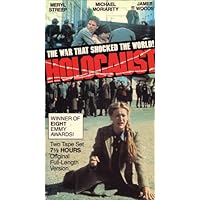
Holocaust (The Mini-Series) (1978) Review

Holocaust (The Mini-Series) (1978)
Average Reviews:

(More customer reviews)
I watched this on network tv when it premiered. It's even harder to watch it today. With twenty years of ethnic cleansings, and smaller holocausts under our belts, one of the major themes of the story holds even truer. If we aren't very very careful any of us can become a killer.

Click Here to see more reviews about: Holocaust (The Mini-Series) (1978)

Plot Summary for "Holocaust" (1978) (mini)"Holocaust" follows each member of the Jewish Family Weiss throughout Hitler's reign in Germany. One by one, the family members suffer the horrible fate of extermination under Anti-Semetic Nazi Law until only one son remains at the end of World War II. A sub-plot follows the story of Eric Dorf, a young German lawyer with a good heart who is changed into a mass murderer by membership in the SS.Summary written by Anthony Hughes

Buy Now

Click here for more information about Holocaust (The Mini-Series) (1978)

Read More...

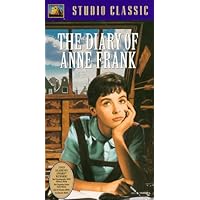
Diary of Anne Frank (1959) Review

Diary of Anne Frank  (1959)
Average Reviews:

(More customer reviews)
Holocaust survivor Elie Wiesel once wrote that dramatizing the Holocaust was a futile task, not because dramatization could not be done, but because any such attempt would trivialize the evil inherent in the Nazi persecution of the Jews. Wiesel had good reason for his belief, having directly experienced what circumstances were like at the Auschwitz death camp.
In one sense I agree with Wiesel; however, I also agree with those, such as director George Stevens, who believed that dramatization served the critical purpose of informing the public of what occurred during the Nazi era. Further, as Otto Frank maintained, it was important that audiences realized that what his family and other Jewish people endured was not something restricted to Jews, but was, rather, an object lesson for the persecution of all people forced to endure the tyranny of genocidal regimes.
In a sense, therefore, it's inevitable that Stevens' filming of 'The Diary of Anne Frank' both failed and succeeded. It failed in that it commercialized the Holocaust, as every dramatic production is forced to do. But it succeeded in its educational mission, especially considering that at the time of its release in 1959, few people were aware of Anne Frank's diary, or of the Holocaust generally.
Seeing the film today, it is still a powerful experience. Admittedly, as an aspect of its commercial treatment, certain elements were introduced that either were not in the original diary ---- such as the stealing of bread by Albert Dussell (pseudonym of Friedrich Pfeffer) ---- or were exaggerated for dramatic reasons (the love interest between Anne and Peter Van Dann). But the overall power of the basic situation ---- the intense atmosphere of tension and claustrophobia ---- and the story of Anne Frank's adolescent transformation and her growing awareness of the transformation of Dutch society through Nazi oppression ---- gives us a window on the Holocaust which is unique. The film, like the diary, holds up a mirror of conscience in what must have seemed at the time to be a world of sprawling insanity. Anne Frank triumphs, as the Nazis emphatically did not, in transcending the contradictions within herself, and as a consequence her idealism shines through at the end (even if this, too, was exaggerated for cinematic reasons).
Millie Perkins, who plays Anne in the film, has sometimes been slighted for her ostensibly awkward performance, but I believe this is a cynical and unjust criticism. For one thing, Perkins was not a trained actress, but rather a model who happened to have the right look and personality for the part. But as both the documentary and one of the other supplements on this DVD point out, this was precisely why George Stevens chose her for the role. He wanted an unknown actress, not a professional who would 'impose' her persona on the character. He believed ---- and I think correctly ----- that her look of innocence, and aura of adolescent idealism, were perfect for what he desired, and it's ultimately these qualities which impress us by their contrast with the horrific circumstances that surrounded her.
The other cast members are also superb. Though Shelley Winters won an Oscar as Best Supporting Actress, virtually all the actors, especially Joseph Schildkraut and Ed Wynn, are equally brilliant. In fact, Schildkraut not only physically resembled Otto Frank, but, according to Anne Frank's cousin (interviewed as part of the accompanying documentary, 'Echoes of the Past'), was also similar to him in terms of personality and demeanor. Wynn, for his part, turns in an amazingly convincing performance in a serious role, playing completely against type.
Whatever the liberties taken by the screenplay writers for 'Diary,' the film remains faithful to the core experiences related in Anne Frank's journal ---- both to her inner emotions and conflicts with her family, and to her widening awareness of her family's place in the overall scheme of Nazi terror. The fact that this DVD transfers the film in such superior video and audio quality, and adds several excellent supplements (including a first-rate 90-minute documentary), makes this disc a fine addition to anyone's video collection.

Click Here to see more reviews about: Diary of Anne Frank (1959)


Buy Now

Click here for more information about Diary of Anne Frank (1959)

Read More...

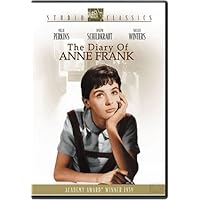
The Diary of Anne Frank (1959) Review

The Diary of Anne Frank (1959)
Average Reviews:

(More customer reviews)
Holocaust survivor Elie Wiesel once wrote that dramatizing the Holocaust was a futile task, not because dramatization could not be done, but because any such attempt would trivialize the evil inherent in the Nazi persecution of the Jews. Wiesel had good reason for his belief, having directly experienced what circumstances were like at the Auschwitz death camp.
In one sense I agree with Wiesel; however, I also agree with those, such as director George Stevens, who believed that dramatization served the critical purpose of informing the public of what occurred during the Nazi era. Further, as Otto Frank maintained, it was important that audiences realized that what his family and other Jewish people endured was not something restricted to Jews, but was, rather, an object lesson for the persecution of all people forced to endure the tyranny of genocidal regimes.
In a sense, therefore, it's inevitable that Stevens' filming of 'The Diary of Anne Frank' both failed and succeeded. It failed in that it commercialized the Holocaust, as every dramatic production is forced to do. But it succeeded in its educational mission, especially considering that at the time of its release in 1959, few people were aware of Anne Frank's diary, or of the Holocaust generally.
Seeing the film today, it is still a powerful experience. Admittedly, as an aspect of its commercial treatment, certain elements were introduced that either were not in the original diary ---- such as the stealing of bread by Albert Dussell (pseudonym of Friedrich Pfeffer) ---- or were exaggerated for dramatic reasons (the love interest between Anne and Peter Van Dann). But the overall power of the basic situation ---- the intense atmosphere of tension and claustrophobia ---- and the story of Anne Frank's adolescent transformation and her growing awareness of the transformation of Dutch society through Nazi oppression ---- gives us a window on the Holocaust which is unique. The film, like the diary, holds up a mirror of conscience in what must have seemed at the time to be a world of sprawling insanity. Anne Frank triumphs, as the Nazis emphatically did not, in transcending the contradictions within herself, and as a consequence her idealism shines through at the end (even if this, too, was exaggerated for cinematic reasons).
Millie Perkins, who plays Anne in the film, has sometimes been slighted for her ostensibly awkward performance, but I believe this is a cynical and unjust criticism. For one thing, Perkins was not a trained actress, but rather a model who happened to have the right look and personality for the part. But as both the documentary and one of the other supplements on this DVD point out, this was precisely why George Stevens chose her for the role. He wanted an unknown actress, not a professional who would 'impose' her persona on the character. He believed ---- and I think correctly ----- that her look of innocence, and aura of adolescent idealism, were perfect for what he desired, and it's ultimately these qualities which impress us by their contrast with the horrific circumstances that surrounded her.
The other cast members are also superb. Though Shelley Winters won an Oscar as Best Supporting Actress, virtually all the actors, especially Joseph Schildkraut and Ed Wynn, are equally brilliant. In fact, Schildkraut not only physically resembled Otto Frank, but, according to Anne Frank's cousin (interviewed as part of the accompanying documentary, 'Echoes of the Past'), was also similar to him in terms of personality and demeanor. Wynn, for his part, turns in an amazingly convincing performance in a serious role, playing completely against type.
Whatever the liberties taken by the screenplay writers for 'Diary,' the film remains faithful to the core experiences related in Anne Frank's journal ---- both to her inner emotions and conflicts with her family, and to her widening awareness of her family's place in the overall scheme of Nazi terror. The fact that this DVD transfers the film in such superior video and audio quality, and adds several excellent supplements (including a first-rate 90-minute documentary), makes this disc a fine addition to anyone's video collection.

Click Here to see more reviews about: The Diary of Anne Frank (1959)

A diary discovered in the attic of an Amsterdam factory reveals the plight of a jewish refugee family that lived there in hiding for two years during the Nazi occupation.

Buy Now

Click here for more information about The Diary of Anne Frank (1959)

Read More...

Kelly's Heroes (1970) Review

Kelly's Heroes (1970)
Average Reviews:

(More customer reviews)
This is definitely one of the funniest war movies of all time! Donald Sutherland, who plays a hippie(!) tank commander, seems out of place in a WW2 setting. However, he had me laughing the whole way through! I can't imagine what this film would be like without his hysterical performance. One of my favorite scenes is when Sutherland's three Sherman tanks attack a Nazi railroad station while playing Hank Williams' music on a loud speaker! I realize that this "WW2 movie" has a definite 70's feel to it (especially with one of the hit songs of the decade, Burning Bridges), & some don't like this movie for that reason. I can't help but have fun everytime I see this! The tanks, even the German ones, look much more authentic than those in Patton or The Battle of the Bulge. This is a real treat for WW2 tank buffs like me who appreciate authenticity. I know the plot is hokey, but who cares? If you want to see a war movie that isn't depressing (like most) or boring then this is for you!

Click Here to see more reviews about: Kelly's Heroes (1970)

A group of soldiers set out to rob a bank and almost win World War II.Genre: Feature Film-Action/AdventureRating: PGRelease Date: 8-FEB-2005Media Type: DVD

Buy Now

Click here for more information about Kelly's Heroes (1970)

Read More...

The Rape of Europa Review

The Rape of Europa
Average Reviews:

(More customer reviews)
As a young man Hilter was an aspiring but mediocre painter. But Hitler's artistic ambitions were thwarted when he was not accepted into the Academy Of Fine Arts in Vienna. Many of those on the admission board were apparently Jewish and some historians blame this rejection as playing an important role in the development of Hitler's rabid anti-Semitism.
This doc begins with a discussion of the Nazi's hatred of modern art, which they considered a "degenerate" Jewish form, and their obsession with collecting classical works of art. From there the film proceeds chronologically through the German invasions of Austria, Poland, France and Russia. In each place the Nazis plundered great works of art. Some were taken into private collections, such as the vast number owned by Hermann Goering, the Nazi's second in command. Others were placed in storage, with Hilter's ultimate goal being to create a massive Fuhrer Museum in his hometown of Linz, Austria.
Fortunately, massive evacuations were undertaken at the Louvre in Paris and the Hermitage in Leningard, which successfully hid numerous works of classic art from theft by the Nazis. But it wasn't only the Germans who did the plundering. The Soviets also engaged in massive looting of German art during their raids on Berlin. Also some Italian art and architecture was destroyed by American bombing. But, to their credit, the Americans also begin sending in Monuments Men who were entrusted with helping preserve art from further destruction and confiscating the works that had being stolen by the Germans.
The film contains a mix of extraordinary archival footage with narration by Joan Allen and interviews with various art historians and others. At close to 2 hours, it is rather long for a documentary and some may find it slow at times. But with it's primary purpose education rather than entertainment, it is best appreciated by those with a strong interest in European art and Nazi atrocities. It is a very well made documentary, however, and comes highly recommeded to those with at least some interest in the subject matter.

Click Here to see more reviews about: The Rape of Europa

Item Name: The Rape of Europa; Studio:Menemsha Films

Buy NowGet 27% OFF

Click here for more information about The Rape of Europa

Read More...

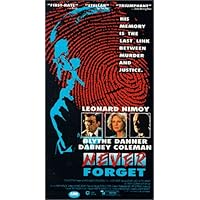
Never Forget (1991) Review

Never Forget  (1991)
Average Reviews:

(More customer reviews)
An outstanding movie of gripping determination and bulldog tenacity!
Leonard Nimoy and Blythe Danner play Mr. & Mrs. Mel Mermelstein, a true-life California couple, thrown into the spotlight of judicial history in the 1980's. He is a Hungarian-born Jew, sole-survivor of his family's extermination at Auchwitz, and she is a Southern Baptist from Tennessee. Their four children are good kids, typical Americans, with just enough spunk and orneriness to irritate each other, but enough love and class to pull together when it counts.
When challenged by a hate group to prove that Jews were actually gassed at Auchwitz, Mel Mermelstein rises to the occasion with the support of his wife and children, in spite of the dangers to himself, his business, and his family.
Dabney Coleman provides Mel's legal help (pro bono) as a lawyer, originally a Roman Catholic from Texas, and brilliantly and believably fits out a role that is my personal favorite among any role he has ever played.
Leonard Nimoy is brilliant as always, and aside from playing Golda Meir's husband opposite Ingrid Bergman, if there was ever a role that shattered his Spock image, this would be it. (Not that I dislike Spock. On the contrary!) Nimoy plays a man who is empassioned, vulnerable to an extent, but tenaciously determined to prove the hate groups to be liars.
Why so committed to such a course? Because before Mermelstein's father died in Auchwitz, he commissioned Mel and his brother (who died shortly thereafter) to "Never Forget" what happened, and to bear witness to the facts of history. Mel Mermelstein did just that, and the United States finally took Judicial Notice of the truth of the Holocaust, some 40 years after WWII.
A great movie! (I taped mine off of TNT a few years ago, when it aired this movie in timed connection with the network premeir of Schindler's List, and this airing was hosted by Leonard Nimoy. I have since worn out my tape. I plan to buy a professional copy when the price drops.)

Click Here to see more reviews about: Never Forget (1991)


Buy NowGet 53% OFF

Click here for more information about Never Forget (1991)

Read More...

Cabaret (1972) Review

Cabaret (1972)
Average Reviews:

(More customer reviews)
While this is probably not a bone of contention with most viewers, I think it's worth noting for those that do pay attention to these things, especially if you base your purchases on them, as I did in this case. The packaging on this newer DVD edition of "Cabaret" states that it is an anamorphic transfer (i.e. "Enhanced for Widescreen TVs"). It is NOT. This is the SAME disc as before, with new a label on it.
They merely changed the packaging, I guess, so that they could mention "Chicago" in the description on the back cover and tie it into the heat for that film. Shame on you, Warner Bros. We all work hard for our money and deserve better than to believe we're buying a new anamorphic transfer, when you are really marketing the exact same discs as before.

Click Here to see more reviews about: Cabaret (1972)

Willkommen, bienvenue, welcome to Cabaret. The winner of eight Academy Awards, it boasts a score by the legendary songwriting partnership behind another film that would energize the movie musical genre with equal razzle-dazzle 30 years later: Chicago's John Kander and Fred Ebb. Inside the Kit Kat Club of 1931 Berlin, starry-eyed singer Sally Bowles (Liza Minnelli) and an impish emcee (Joel Grey) sound the clarion call to decadent fun, while outside a certain political party grows into a brutal force. Cabaret caught lightning (and won Oscars) for Minnelli, Grey and director Bob Fosse, who shaped a triumph of style and substance. Come to this Cabaret, old chum. You'll never want to leave.DVD Features:Documentary:25th-Anniversary Documentary "Cabaret: A Legend in the Making"Featurette:"The Recreation of An Era"Interactive MenusInterviewsProduction Notes:"Kit Kat Klub Memory Gallery": The film's stars and creators reminisce about making movie musical history.Scene AccessTheatrical Trailer


Buy NowGet 34% OFF

Click here for more information about Cabaret (1972)

Read More...

Dresden Review

Dresden
Average Reviews:

(More customer reviews)
I made a last minute decision to watch this on the History International channel. It's one of the best TV decisions I've made in a long time.
This is a fabulous tale of the horrors of war, humanity of all sides in a conflict and romance.
You can feel the horror building as the British planes approach Dresden and see the horror of the devastating firestorm following the massive bombings as more than 25,000 civilians were killed.
There is tenderness here, too. The characters are multi-dimensional. Even those we think have done terrible things, we know are conflicted and in at least case seek penance.
The photography and special effects are stunning.
I'll have to save my nickles and dimes to buy this one.

Click Here to see more reviews about: Dresden

January, 1945. In the uncertain days leading up to the Allied bombings of Dresden, Anna (Felicitas Woll) discovers Robert Newman (John Light), an injured British pilot, hiding in a hospital cellar. Torn between loyalty and desire, the young nurse risks everything to help him recover. As Anna struggles to keep his true identity a secret and Robert battles to survive behind enemy lines, a catastrophic fate descends upon the city. DVD Extras:Making-of Featurette, Archival Military Footage of the Dresden bombings

Buy NowGet 27% OFF

Click here for more information about Dresden

Read More...

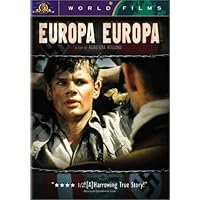
Europa Europa (1990) Review

Europa Europa (1990)
Average Reviews:

(More customer reviews)
This is one of the best films in the genre--historial film from autobiography. Marco Hofschneider brings to brilliant life the story of Salamon Perel, a German Jew. From the days of Kristallnacht--the Night of Broken Glass, when Jewish businesses were trashed and vandalized throughout Germany, to his final reunification with his brother--to poignant to say more about this here...this is a cinematic masterpiece.
I've seen few films that capture the turmoil of adolescent identity and identification so well. True, the Nazi era is the backdrop, but the themes couldn't be more universal. In that respect, it is also more relevant today, in 2004, than during the 1980s, when it was filmed--especially in America, where the American identity has been deconstructed so as to be hardly palpable. Also, it is equally relevant in Europe, where national distinctions could meld into a Confederacy if not a Union of some power.
Politics aside, this is an intensely personal film, one where the unquestioned identity of youth (German) falls victim to oncoming War and cruel happenstance. Perel must continually revise his vision OF himself and FOR himself, and at one point wishes for nothing more than to be an Nazi, for a beautiful young German girl becomes enfatuated with him. How did he end up in this position, wearing the uniform of the Hitler Youth at an Elite boarding school in Berlin? Or lose his virginity to a high-ranking female Party member while he is escorted by train from the Eastern Front to Berlin, as a Folk Hero (Volksdeutscher Held). Perhaps you think it unimaginable. I do not.
I've seen places in German where the remnants of Jewish culture and tradition are clear as day--such as a former High School for Jews in Berlin--with Hebrew and German inscribed clearly in the stones.
No, though Germany seems to some a heartless pillar of unemotionality, efficiency, heartlessness, the German characters in Europa, Europa are as human as those found anywhere. They fall victim to their personal aspirations, desire to please, deceitfulness, betrayal...simply put, human.
Although current fashion is to think of the period as one of the "banality of evil" (attributed to Hannah Arendt, Holocaust scholar), this film exposes the period as one more of human triumph and tragedy, and that, while we grow into adulthood, our personal identity is as much at the mercy of the passage of time and events as a unique, solitary construction.
See this film! It will draw you into the themes of Life, Love, and Redemption, and be over leaving you desperate for more.

Click Here to see more reviews about: Europa Europa (1990)

This "incredible, true story" (Los Angeles Times) is at once "eye-opening, harrowing and humorous" (Leonard Maltin) as it recounts the severe actions a young boy must take in order to survive the Holocaust. Based on the autobiography of Solomon Perel, a young German Jew, the film "bounds from one jaw-dropping episode to the next" (The New Yorker) and puts you in the middle of war-torn Europe where ingenuity, timing and luck are the key to survival.Separated from his family at the age of thirteen, Solly (Marco Hofschneider) takes on various identities to hide his Jewishheritage. First passing himself off as an orphan and later as one of the "Hitler Youth," Solly carries on his charade, hoping desperately to keep his identity hidden and make it through the war alive.

Buy NowGet 20% OFF

Click here for more information about Europa Europa (1990)

Read More...

The Devil's Brigade (1968) Review

The Devil's Brigade (1968)
Average Reviews:

(More customer reviews)
This fact based WW2 film is one of the great whip 'em into shape movies. When the call went out for U.S. and Canadian volunteers for a commando unit many commanders used this as a oppurtunity to unload their trouble makers. Choir boys don't make good commandos so the right men were available for the job. This film shows the tough training that these men endured including skiing, mountain warfare and advanced hand to hand combat. I've read a few books on these men and the film accurately potrays the bonding developed between the US and Canadians as they teamed up in the local bars to fight lumberjacks and miners. After their harsh training the force is sent to Italy. The film makes no mention that the force's first mission was against the Japanese in the Aluetion Islands. The climax of the film is an assault on a mountain top in Italy. These scences are so well done that when I attended the USMC mountain warfare school at Bridgeport CA. they used this clip as a training tool. The film has a great soundtrack and lots of hero type actors. Just one problem-where did those red berets come from? Read the 2001 published book, "The Black Devil Brigade" told by the men themselves.

Click Here to see more reviews about: The Devil's Brigade (1968)

They were misfits, rebels and heroes. Oscar(r) winners* William Holden and Cliff Robertsontopline this riveting World War II saga based on the true story of the First Special Service Force.Capturing the drama of combat with "outstanding" cinematography and an "exceptionally strong cast" (The Hollywood Reporter), The Devil's Brigade is a thrilling tribute to this renowned fighting unit.Lt. Col. Robert T. Frederick (Holden) takes on the daunting task of melding a renegade group of American and Canadian recruits into a crack team of commando warriors. Frederick's superiors doubt the rookies until Frederick volunteers them for a perilous attack on a Nazi stronghold in the mountains. His men will be outnumbered and outgunned, but that's a fair fight to "the devil's brigade."

Buy NowGet 27% OFF

Click here for more information about The Devil's Brigade (1968)

Read More...

Das Boot - The Director's Cut (1982) Review

Das Boot - The Director's Cut (1982)
Average Reviews:

(More customer reviews)
This review will attempt to assist those who already own the Director's Cut (or Superbit version), but who are thinking about also buying the newer "Original Uncut Version" (293 minutes on 2 DVDs).
The first thing you should know is that the English dub has been largely redone; if you are familiar with the Director's Cut dialogue, you will immediately notice that the English dub's script has been changed in many places within the Uncut Version. In particular, the saltier comments throughout the movie have been deleted and replaced with much more 'polite' translations. Moreover several of the characters (Werner the war correspondent, Kriechbaum the Navigator, the boat's second-in-command [whom is referred to as "Number One"], as well as the comical red-haired Second Officer, etc.) have received new voices in the English dub (if only in select places), and their scripts have been changed in numerous instances as well. I raise this as a concern because I realize diehard fans may find these (sometimes unnecessary) dialogue changes irritating. This is the main flaw of this edition, in my opinion.
While the Uncut Version soundtrack includes new sound effects, and adds frequent narration in old footages areas (largely excerpts from Werner's diary), short pieces of the new footage have not been remastered and look very grainy. Most of the new footage is however seamless and not of unacceptable quality (contra another reviewer). The sections that have been neglected are mainly external shots of the uboat -- in one such instance an obvious blue line spans the vertical width of the screen for about 20-30 seconds.
The new footage that appears in the Uncut Version is not simply superfluous addition either, but in a few instances actually clarifies or adds completely new elements to the Director's Cut storyline (I won't ruin that for you, suffice to say that some very interesting plot elements are introduced in this newer edition). This cut is also much more pointed in depicting the stress, paranoia, poor morale, and sheer boredom of the crew, who are shown praying, making mistakes, complaining, and doing many stupid things just to pass the time and ease the strain of being a submariner. Of interest is the enthusiasm that the crew eventually displays at the prospect of going into battle: not because that is what they have trained to do, but because anything is preferable to the endless waiting and resulting apathy between enemy contacts. Numerous conversations between various characters have been added, and minor characters that didn't make it into the Director's Edition appear in the Uncut Version. A few treats exist as well, such as a shot where the Second Officer can be more clearly seen using a Kreigsmarine four-rotor ENIGMA machine to decode a transmission. Most importantly of all, the new footage emphasizes the sense of watching the story unfold through the eyes of the war correspondent, which is what Director Wolfgang Peterson originally intended. The new footage adds considerably to the picture's atmosphere, and contributes important characterization -- particularly for Johann the Chief Engineer, the second-in-command, and Grade, the Chief of the Boat.
German with English subtitles is the default option, but an English dub with French subtitles is also available. The English track has been upgraded to Dolby 5.1.
This 2-DVD Uncut Version is highly recommended, but isn't for everyone -- note that it is deliberately aimed at the fan base. This special-interest group is likely the only one this version of the film will please. If you've never seen Das Boot, borrow a friend's copy of the shorter Director's Cut first; when you've cultivated an appreciation for this benchmark in WWII filmmaking, come back and get this edition. I would not recommend buying this version if you've never seen the movie -- it might turn you off due to its sheer length and relatively slower pace. Neither should the fan looking solely for special features purchase this Uncut Version - the featurette entitled: "The Making of Das Boot: Behind the Scenes" is a little over seven (7) minutes long, and is mainly a justification for the re-release of the full length cut.
A member of the Das Boot `cult' would be very pleased to see the extra footage in this Uncut Version. If you're a diehard fan, don't think twice; I bought mine even after having read the more negative reviews here. Four stars given for the substantive quality and importance of the new footage to the overall picture; the image quality and sound in places is not perfect, and there are no new special features worthy of the name, so this cut cannot receive five stars. Since you are willing to sit through close to 5 hours of Das Boot anyway, the instances of grainy new footage shouldn't overwhelm you. In all, the extra tidbits (in my estimation) are worth the money.

Click Here to see more reviews about: Das Boot - The Director's Cut (1982)

DAS BOOT - DIRECTOR'S CUT - DVD Movie

Buy NowGet 26% OFF

Click here for more information about Das Boot - The Director's Cut (1982)

Read More...

The Boy in the Striped Pajamas (2008) Review

The Boy in the Striped Pajamas (2008)
Average Reviews:

(More customer reviews)
2008 was a very big year for films adapted from books, with several reaching the high acclaim of Academy Award nominations. One adapted film that didn't get much recognition, however, is The Boy in the Striped Pajamas, based on the novel by John Boyne.
The film opens with the following quote emblazoned on the screen: "Childhood is measured out by sounds and smells and sights, before the dark hour of reason grows." As the quote suggests, this is a sort of coming of age film, and over the course of 94 minutes,those in the audience slowly watch the innocence of children unravel before their eyes as the reality of what is taking place becomes more and more illuminated.
The Boy in the Striped Pajamas is the story of a family living in Berlin during World War II. The main character, an eight-year-old boy named Bruno (Asa Butterfield), spends his time in Berlin playing with his friends and reading adventure novels. His father, brilliantly played by David Thewlis (most will recognize him as Professor Lupin from the Harry Potter franchise), soon gets a promotion, however, and Bruno, his parents, and his sister move to the German countryside where his father will take up his new position. Unlike their time in Berlin, Bruno's parents are careful to keep their son close to home, and Bruno, an explorer and adventurer at heart, is confined to the small fenced area surrounding their house.
From his bedroom window, Bruno can see what he thinks is a strange farm off in the distance. He notices that the "farmers" act strangely and wear strange "pajamas" while they work. Later, he notices that the smokestacks on the farm give off an absolutely wretched stench when they are burning. By now, of course, the audience knows that what Bruno has seen is not a farm at all, and that his father's new position is Commandant of the nearby concentration camp.
The naive Bruno manages to escape from the grounds of his home and is finally free to explore the woods behind the house. Not paying much attention to where he is going, he happens upon a remote part of the camp where he meets another eight-year-old boy, Shmuel (Jack Scanlon), confined by a different kind of fence. The two become friends, and Bruno sneaks away every chance he gets to go and visit the only playmate he has found since moving away from Berlin.
This is an interesting film on many accounts, the most fascinating being the changes that each member of Bruno's family undergoes. His father, a seemingly reluctant, "political only" Nazi at the beginning, devolves into a hardened, harsh man. Bruno's sister Gretel (Amber Beattie), encouraged by a handsome lieutenant working with her father, falls victim to the Aryan propaganda so much that her room is soon filled with posters of the Fuhrer, much like young girls today would adorn their walls with images of the Jonas Brothers. Finally, there's Bruno's mother (Vera Farmiga), who is the antithesis to the growing Nazism in her family. At first she is happy for her husband and the success he has as a soldier in the German army. However, as she learns more about her husband's new charge, and the truth is revealed about the camp, she becomes bitter and angry.
And then there's Bruno. All the signs are there. Bruno comes across every hint he possibly could as to the truth behind the "farm" where his friend Shmuel lives and works. Yet he remains utterly oblivious. Caught between the two stages of "sounds and smells and sights" and "the dark hour of reason," the filmmakers show the great price of failing to deal with the world around us.
Much of the criticism that I've read regarding this film deals with the supposed overextension of innocence to both child characters. Many critics cannot grasp the idea of an eight-year-old child not understanding that the "farm" is really a horrible work camp, that the "pajamas" are prison clothes, that the mysterious disappearances that Shmuel tells of and the smoke from the chimneys are the results of the systematic slaughter of the camp's inhabitants. That may be a fair criticism, but I think it misses the greater point that the filmmakers seem to be making.
Bigger than a child's loss of innocence, Bruno seems to be a representation of Germany, perhaps even humanity, itself, and the failure to deal with the evil right before one's very eyes. So many Germans claimed the innocence that we see in Bruno, saying they had no knowledge of the Final Solution to the Jewish Problem that Hitler and his SS were carrying out across the European continent. Even today, despite all the existing evidence, there are still those that deny the Holocaust happened, not wanting to acknowledge the great evil of which humanity, perhaps even their neighbors and family members, is capable. More than anything else, this film shows the great price humanity pays for such utter naivete.
All in all, this is a very well done film. The story, though slow in the beginning, is engaging, thought-provoking, and, in the end, heart-wrenching. It is well-acted, especially in the performances of the young boys, and the bright colors and airy score provide a sort of bizarre juxtaposition to what is happening on screen.
The DVD includes the typical bonus features of deleted scenes and a feature-length commentary, as well as a featurette entitled "Friendship Beyond the Fence."

Click Here to see more reviews about: The Boy in the Striped Pajamas (2008)

From Miramax Films, the studio that brought you the Academy Award winning Life is Beautiful (Best Foreign Language Film, 1998) comes The Boy in the Striped Pajamas. Based on the best selling novel by John Boyne, it's an unforgettable motion picture experience powerful and moving beyond words (Pete Hammond, Hollywood.com). Bored and restless in his new home, Bruno, an innocent and naive eight year old, ignores his mother and sets off on an adventure in the woods. Soon he meets a young boy, and a surprising friendship develops. Set during World War II, this remarkable and inspiring story about the power of the human spirit will capture your heart and engage your mind. Bonus Features include Deleted Scenes With Optional Commentary by Writer, Director Mark Herman and Author John Boyne, Friendship Beyond the Fence Featurette, Feature Commentary by Writer, Director Mark Herman and Author John Boyne

Buy NowGet 33% OFF

Click here for more information about The Boy in the Striped Pajamas (2008)

Read More...

Hitler in Colour (2005) Review

Hitler in Colour (2005)
Average Reviews:

(More customer reviews)
Adolf Hitler and the people of the Third Reich are seen here as we've never seen them before -- not only in color, but laughing, clowning, having a good time.
Well, the German people were, anyway. Hitler always seemed to be too aware of his position as the stern, implacable warlord to loosen up whenever he even suspected a camera was focused on him. To see Der Fuehrer smile, laugh or appear even moderately light-hearted, you have to watch for the moment when he happens to be looking partially away from the camera, to have momentarily forgotten its presence. There is one scene where he chats briefly with a group of German children, giving one pretty little blonde girl a hug. But it's shot from a short distance and his face is partially hidden. I've seen still photos, candid ones, of Adolf Hitler interacting with children, who seem to be relaxed and happy in his presence. Look at those photos, and read reminiscences of people who were close to Hitler, and you'll find out, probably to your amazement, that yes, the "most evil man in history" was fond of children.
"Hitler In Colour" does give us a much more "human" look at the German people of the Third Reich era, showing them at work and play (although footage of smiling children giving the Nazi salute are admittedly unsettling.) Normal human interactions and the underlying evil of the Nazi era often were overlaid, one on the other.
This DVD is very illuminating for those who have until now only seen fading black and white movies of the Hitler era. It is an experience not to be missed.

Click Here to see more reviews about: Hitler in Colour (2005)

The producers of the internationally acclaimed and award-winning In Colour DVD series now bring Hitler in Colour, a telling story of the rise and fall of a man who devastated the lives of countless numbers of people around the world. For 12 years, Hitler's overpowering personality dominated the German nation. He led his people from economic ruin in European conquest and to the brink of creating a New World Order. In his wake, he brought a reign of terror that caused death to millions. Drawing from recently discovered German film collections that comprise hours of previously unseen color footage, and woven with eyewitness testimony, Hitler in Colour tells the astonishing and disturbing story as never before. Narrated by Emmy Award winning British actor Brian Cox.

Buy Now

Click here for more information about Hitler in Colour (2005)

Read More...

Eva Braun Her Home Movies Complete and Uncut Vol. 1 Review

Eva Braun  Her Home Movies Complete and Uncut Vol. 1
Average Reviews:

(More customer reviews)
Yes, there are some scenes that are washed out or too dark & there are plenty of wateraction scenes, but keep in mind that this young lady was filming with her camera for her own entertainment and certainly had no ideas of her home movies being captured by the US Army or published for the world's critique some three quarters of a century later. These movies are just that, the good, the bad and always the interesting. Simply put, these movies reflect what was important and enjoyable to Eva Hitler nee Braun. She was a young lady thrust into the political vortex of great power and somehow still maintained her balance, sense of humor and happiness. There are scenes of children, flowers, lakes, snow capped mountains, the Berghof, the Fuhrer, top National Socialist leaders, her friends, her sister's wedding, etc. Take them for what they are and learn from them. The format of no commentary and using classical music as a background is probably the best way to present them since any comments would only be negative and take away from her original intent. Afterall we have heard enough anti-Hitler propaganda to last ten generations since 1933 and for once it is a pleasure to be able to study her films without distraction. This set of films on three cd's is an outstanding historical assest for research and gives one, if they should allow, a peek into the mind of one Bavarian girl who enjoyed life as much as her circumstances would allow and who also had a touch of being an modest film artist.

Click Here to see more reviews about: Eva Braun Her Home Movies Complete and Uncut Vol. 1


Buy Now

Click here for more information about Eva Braun Her Home Movies Complete and Uncut Vol. 1

Read More...

Seventh Cross (1944) Review

Seventh Cross  (1944)
Average Reviews:

(More customer reviews)
What a pleasant surprise when I first viewed "The Seventh Cross." I thought the movie might be good, but simply "good" does not adequately describe this film. It is superb. The acting is excellent, especially for a movie of its time. But what else would you expect from Spencer Tracy, Hume Cronym, Jessica Tandy, and Agnes Morehead? Even the bit characters played their parts very well. The story is suspenseful and easily keeps your interest. Of the more than 250 movies in my private library, this is one of the best. Every movie lover should watch this film, and if you, like I, enjoy stories built around the World War II era, "The Seventh Cross" is an absolute "must see." They just don't make movies like this anymore.

Click Here to see more reviews about: Seventh Cross (1944)


Buy Now

Click here for more information about Seventh Cross (1944)

Read More...

The Longest Day (1962) Review

The Longest Day (1962)
Average Reviews:

(More customer reviews)
The Longest Day (1962 film)
In 1959, 15 years after the Allied invasion of Normandy, former war correspondent Cornelius Ryan wrote The Longest Day, his popular and critically-acclaimed account of the D-Day landings. Based on painstaking research and interviews with Allied and German veterans and the French civilians swept up in the events of June 6, 1944, The Longest Day remains among the best books on the topic.
It is not surprising, then, that 20th Century-Fox studio chief Darryl F. Zanuck bought the film rights and asked Ryan, (who, besides having been a reporter, had also written plays) to adapt The Longest Day into a screenplay for a major motion picture. Zanuck, who had served in the Army Signal Corps as a lieutenant colonel and helped document the D-Day landings, had always wanted to make a feature film about the invasion. He also had another pressing reason to make what he thought would be a big hit: 20th Century-Fox, nearly crippled by box office flops and the costly production of Cleopatra, was on the brink of bankruptcy.
In order to attract audiences, Zanuck and his massive production team assembled a cast almost as large as the actual invasion force. 48 major international stars from three countries were signed on to what a World War II trivia book described as "the most expensive black-and-white movie made." Shot in studios near Paris and on the Mediterranean island of Corsica, The Longest Day required not one but three directors. Andrew Marton shot the American exterior episodes, Bernhard Wicki handled the German exterior episodes, and Ken Annakin directed the British exterior episodes. Overseeing the entire project were Zanuck and Associate Producer Elmo Williams, who would later executive produce the Japanese-American Pearl Harbor classic, Tora! Tora! Tora!
The movie basically follows the book's structure in its three major acts: The Wait, about the preparations on both sides for the invasion; The Night, about the night airborne assault; and The Day, about the landings on the five invasion beaches. The DVD breaks these three acts into 12 chapters.
While by early 21st Century standards The Longest Day's combat scenes are rather tame - there are no extremely gory scenes as explicit as those in Saving Private Ryan - they do capture the vastness and complexity of the Normandy landings. Shot in a semi-documentary style (major characters are introduced with identifying "credits" so we know who is who), The Longest Day is as accurate as a 1962-era film studio could depict an actual event. The black-and-white presentation allows insertion of a few snippets of actual documentary footage (mainly of German soldiers marching through Paris and running to their fortifications near the beaches) seamlessly into the film. Of course, some characters (such as Eddie Albert's Col. Thompson) seem to be composites or even fictitious, and some actors (such as John Wayne and Robert Ryan) look nothing like the officers they are portraying. Wayne plays Lt. Col. Benjamin Vandenvoort, who in 1944 was in his 30s, while Ryan plays Brig. Gen. James "Slim Jim" Gavin, who at 38 was the Army's youngest general. (The more accurate, but far less popular sequel, A Bridge Too Far, cast Ryan O'Neal as Gavin.)
Accuracy goes out the window in at least one respect, and this one is at the top of most D-Day veterans' list of gripes. While the movie does mention the awful conditions on the transports and landing craft ("Man, that stink! Diesel oil, backed up toilets, vomit. And there ain't no place to get sick in!" gripes one soldier to Roddy McDowell), when the Allied soldiers get out of the landing craft, they hit the beaches running and screaming like banshees. In Stephen E. Ambrose's 1994 D-Day, June 6, 1944, veterans scoff at Zanuck's fanciful depiction, pointing out that they were too tired and too sick to run across the beach, much less yell like Confederates at Gettysburg.
Nevertheless, The Longest Day remains one of the best war movies ever made. Released in October of 1962 and enjoying a long run at the theaters, it was the box office's top draw for 1963, earning an Academy Award for special effects and, luckily for Zanuck, saving 20th Century Fox from bankruptcy.
The DVD presents The Longest Day to its original CinemaScope wide screen presentation, improving on the CBS-Fox two-cassette VHS version, which was released on the usual pan-and-scan "full screen" re-edit. Other improvements are a sound remastering by THX and a few tiny bits of additional footage. The single disc, however, has very few extra features; only the theatrical trailers to The Longest Day, Patton, and Tora! Tora! Tora!

Click Here to see more reviews about: The Longest Day (1962)


Buy NowGet 10% OFF

Click here for more information about The Longest Day (1962)

Read More...